
 Posted by
 For years after my assault, I told no one. The shame was too heavy. I thought I was the only person in the world who felt this broken. Then my therapist suggested group psychotherapy for trauma survivors, and I was horrified. Share my story with strangers? Hear their trauma on top of mine? I would rather stay silent forever. But I was exhausted from carrying the weight alone. I went. I was wrong about everything.
Group psychotherapy for trauma survivors is a structured therapeutic approach where a small group meets regularly with trained facilitators to process traumatic experiences together. It is not a support group, where members share advice and comfort. It is therapy, with evidence-based protocols, confidentiality agreements, and clinical oversight.
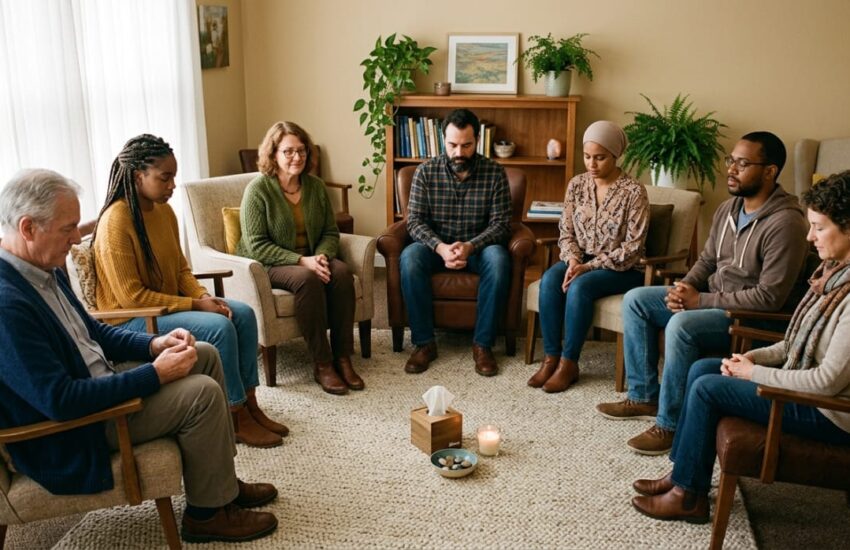
The first thing I learned was that I was not alone. That sounds obvious, but knowing something intellectually is different from feeling it. Sitting in a room with seven other people who had experienced different horrors but the same aftermath, nightmares, hypervigilance, shame, avoidance, I felt something shift. My isolation was not evidence of my brokenness. It was a symptom of trauma. And symptoms could be treated.
We started with grounding exercises. Before anyone shared anything difficult, the facilitators led us through breathing, body scans, and noticing the room around us. I learned to anchor myself in the present before diving into the past. Those skills saved me during hard sessions and later during hard days at home.
The group moved at a slow, careful pace. No one was forced to share. No one was pushed to go deeper than they were ready for. I sat in silence for the first three sessions, just listening. The facilitators checked in with me privately afterward. “How was that for you?” “What did you notice?” They did not pressure me to speak. They trusted that I would when I was ready.

When I finally shared my story, my voice shook. I cried. I almost left. But the group held space. No one interrupted. No one offered unsolicited advice. No one compared their trauma to mine. When I finished, the facilitator simply said, “Thank you for trusting us with that.” That was enough. I felt witnessed, not exposed.
One of the most powerful elements was witnessing others’ courage. Watching someone else speak their unspeakable story, cry, and survive gave me permission to do the same. Their healing became a model for my own. If they could sit in this room and return the next week, maybe I could too.
Trauma isolates. It tells you that no one can understand. The group disproved that lie every session. Our stories were different, but our symptoms were familiar. We learned the language of trauma together, hyperarousal, intrusion, avoidance, negative alterations in mood and cognition. Naming our experiences reduced their power.
The group also taught me to tolerate distress without escaping. When another member shared a triggering story, my instinct was to flee. But the facilitators guided us to stay, breathe, and notice our reactions. I learned that I could feel triggered without being retraumatized. I could witness pain without being consumed by it. That skill was essential for daily life outside the group.
We practiced giving and receiving feedback in structured ways. “When you shared X, I felt Y.” No fixing. No rescuing. No comparing. This clean communication rebuilt my trust in relationships. If I could be honest in this room and not be destroyed, maybe I could be honest elsewhere.
The group also addressed the shame that trauma leaves behind. Shame says you are bad. Shame says you deserved it. Shame says no one would want you if they knew. In the group, I spoke my shame aloud and discovered that others felt the same. Their acceptance of me helped me start accepting myself.
After six months, the group ended. We had a final session where we reflected on our progress. I was not cured. Trauma does not fully disappear. But I was different. I slept better. I startled less. I reached out to friends. I stopped hiding.
The other members were not my friends in a traditional sense. We did not exchange phone numbers or meet for coffee. But they were something else. Witnesses. Companions on a hard road. People who saw me at my worst and did not look away.
There is so much more to learn about healing from trauma. Our website is filled with articles on group therapy, individual approaches, and finding the right support. Head over and explore—because you are not alone, even when it feels that way.
References
Roberts, M. M., et al. (2002).** Reduction of trauma symptoms following group therapy. *Australian and New Zealand Journal of Psychiatry, 36*(1), 67–74. https://pubmed.ncbi.nlm.nih.gov/11929440/
Roberts, M. M., et al. (2016).** Group psychotherapy for female adult survivors of interpersonal psychological trauma: A preliminary study in Scotland. *Journal of Mental Health, 25*(6), 512–519. https://pubmed.ncbi.nlm.nih.gov/26850453/
Zhang, Y., et al. (2019).** Efficacy of group psychotherapy for posttraumatic stress disorder. *Journal of Traumatic Stress, 32*(1), 1–12. https://pubmed.ncbi.nlm.nih.gov/29179647/
Psych Central. (2016, March 11).** Group therapy for trauma: Is it effective? https://psychcentral.com/health/can-group-therapy-help-heal-trauma
Charlie Health. (2023, July 4).** Group therapy for trauma: Is it effective? https://www.charliehealth.com/post/group-therapy-for-trauma-is-it-effective