
 Posted by
 I used to think relaxation was something you earned after finishing everything on your to-do list. The problem was, my to-do list never ended. There was always one more email, one more task, one more obligation. Rest became a reward I never quite reached.
My body eventually made the decision for me. Chronic headaches, tight shoulders that never released, a jaw I clenched even in my sleep, and anxiety that sat in my chest like a permanent resident. My doctor didn’t prescribe medication. She wrote one word on a prescription pad and handed it to me: “Breathe.”
I was offended. Breathe? I was breathing fine. That was the whole problem, I was breathing, but barely, and too fast, and with my shoulders up around my ears. I didn’t know there was another way.
Here’s what I learned about relaxation techniques, the ones that actually work, the ones you can do anywhere, and the ones that saved me from my own relentless drive.
The first technique I learned was diaphragmatic breathing, or belly breathing. Most of us breathe shallowly, using only the top part of our lungs. This keeps the nervous system in a state of low-grade alert. Belly breathing engages the diaphragm, activates the parasympathetic nervous system, and signals your body that it’s safe to rest.
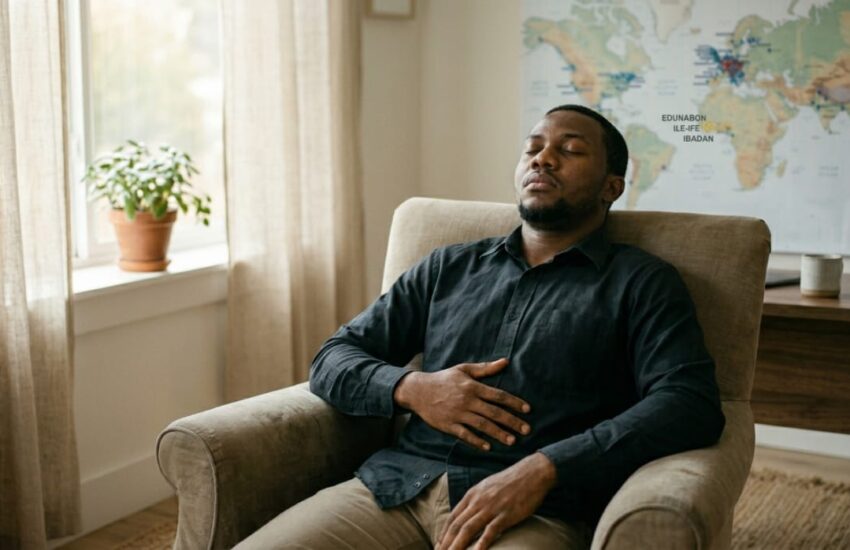
I started practicing for five minutes each morning. I’d lie on my back, one hand on my chest, one on my belly. I’d breathe in slowly through my nose, feeling my belly rise. Then I’d breathe out even more slowly through my mouth, feeling my belly fall. The first few times, it felt unnatural. My chest wanted to do all the work. But slowly, my body remembered something it had forgotten.
The second technique was progressive muscle relaxation. This one sounded strange to me at first—you systematically tense and then release each muscle group in your body. But the science is solid. Tensing first helps you recognize what relaxation actually feels like. Many of us are so used to carrying tension that we don’t notice it anymore.
I’d start with my feet, curling my toes tightly for five seconds, then releasing. Then my calves, my thighs, my hips, my stomach, my hands, my arms, my shoulders, my neck, my face. By the time I reached my jaw, the tension I’d been holding unconsciously would melt away. I’d feel heavier, softer, more present.
The third technique was the body scan. This is gentler than progressive muscle relaxation, no tensing, just noticing. I’d close my eyes and bring my attention to different parts of my body, one at a time, without trying to change anything. Just noticing. Often, just the act of noticing would release tension I didn’t know I was holding.
I used the body scan when I couldn’t sleep. Instead of lying there frustrated, I’d slowly move my attention from my toes to the top of my head. By the time I finished, my mind had stopped racing and my body had settled. Sometimes I fell asleep mid-scan. That was fine too.
The fourth technique was visualization or guided imagery. My therapist taught me to create a “safe place” in my mind, a beach I’d visited once, with warm sand and the sound of waves. When stress spiked, I’d close my eyes and go there. I’d feel the sun on my skin, smell the salt in the air, hear the rhythm of the water. Within minutes, my heart rate would slow. My breathing would deepen. My body believed the image was real.
I recorded myself describing the scene and listened to it on headphones during particularly stressful days. That recording became my portable calm.
The fifth technique was something called “five senses grounding.” This is for moments when anxiety or stress feels overwhelming, when you’re spiraling and need to come back to the present quickly. You name five things you can see, four things you can touch, three things you can hear, two things you can smell, and one thing you can taste.
I used this during a panic attack on an airplane. I couldn’t change where I was, but I could notice the pattern on the seatback, the texture of the armrest, the hum of the engines, the faint smell of coffee, the mint on my tongue. By the time I finished, the attack had passed.
The sixth technique was mindful movement. Not exercise, movement with attention. Yoga, tai chi, or simply stretching while paying attention to the sensations in your body. I started taking ten-minute walking breaks where I did nothing but walk. No phone, no podcast, no agenda. Just the feeling of my feet on the ground, the air on my skin, the movement of my legs.
Those walks became anchors in my day. When I felt the stress building, I’d step outside for ten minutes. The movement and the attention together were more calming than either alone.
The seventh technique was something I resisted for a long time: simply doing nothing. Sitting in a chair, looking out a window, letting my mind wander. No agenda, no productivity, no purpose. This was the hardest technique for me. My inner achiever screamed that I was wasting time. But doing nothing, it turns out, isn’t doing nothing. It’s allowing your nervous system to reset. It’s giving your brain space to process. It’s rest, real rest, not the kind you have to earn.
The eighth technique was learning to relax my face. I didn’t know I was walking around with a furrowed brow and a clenched jaw until someone pointed it out. I started setting random reminders on my phone to check my face. Forehead smooth? Jaw unclenched? Tongue off the roof of my mouth? These micro-adjustments took seconds but changed how I felt for the rest of the day.
The ninth technique was using sound. Not music necessarily, though that worked too but specific sounds that signaled safety to my nervous system. A recording of rain. A fan at night. A particular playlist I used only for relaxation. Over time, those sounds became conditioned cues. As soon as I heard them, my body started to settle.
The tenth technique was the simplest and the hardest: I learned to say no. Most of my stress came from overcommitment. I was saying yes to everything, then trying to relax my way out of the consequences. Relaxation techniques helped, but they couldn’t fix a life that was fundamentally overloaded. I had to change the conditions that were making me so tense. That meant boundaries. That meant disappointing people. That meant choosing my peace over their approval.
If you’re new to relaxation techniques, start small. Five minutes of belly breathing in the morning. A two-minute body scan before bed. One grounding exercise when you feel stress spiking. The techniques work, but they work best with consistency. A five-minute daily practice is more effective than an hour once a month.
You don’t need special equipment. You don’t need to sit cross-legged or chant or believe anything you don’t already believe. You just need to breathe, notice, and give your nervous system a chance to remember what ease feels like.
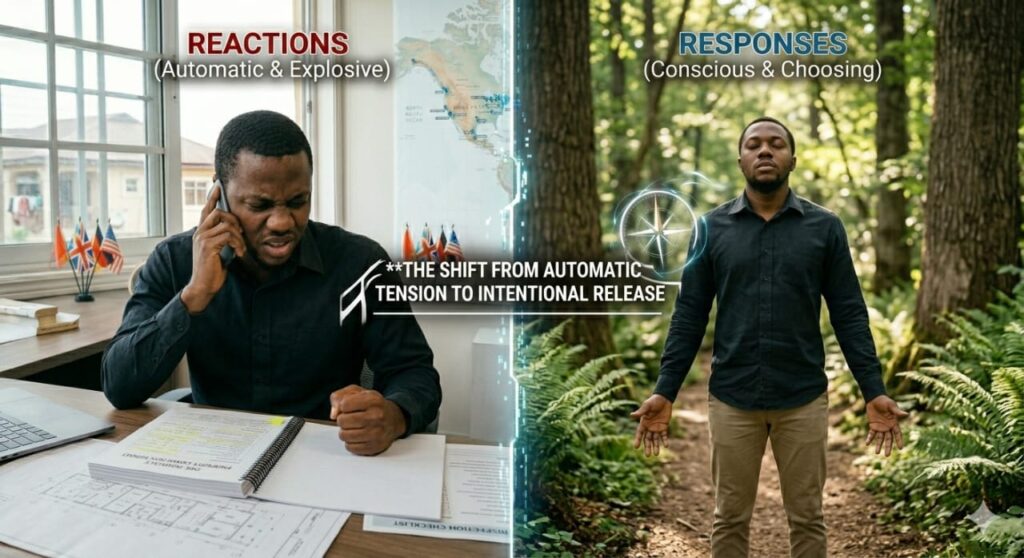
My headaches are gone now. My shoulders still get tight, but I notice sooner and release faster. I sleep better. I’m less reactive. The techniques didn’t eliminate stress from my life, that wasn’t possible, but they gave me tools to meet stress differently. Instead of being consumed by it, I can breathe, notice, and choose. You can too.
There’s so much more to learn about managing stress and finding calm. Our website is filled with articles on relaxation, mindfulness, and nervous system regulation. Head over and explore because you deserve to rest, and rest doesn’t have to be earned.
References
Mayo Clinic. (2026, February 4). *Relaxation techniques: Try these steps to lower stress*. https://www.mayoclinic.org/healthy-lifestyle/stress-management/in-depth/relaxation-technique/art-20045368
Harvard Health Publishing. (2022, February 1). *Six relaxation techniques to reduce stress*. https://www.health.harvard.edu/mind-and-mood/six-relaxation-techniques-to-reduce-stress
National Center for Biotechnology Information. (2023, August 27). *Relaxation techniques*. In *StatPearls*. https://www.ncbi.nlm.nih.gov/books/NBK513238/
American Psychiatric Association. (2024, March 13). *Relaxation techniques for mental wellness*. https://www.psychiatry.org/news-room/apa-blogs/relaxation-techniques-for-mental-wellness
MedlinePlus. (2024, September 14). *Relaxation techniques for stress*. https://medlineplus.gov/ency/patientinstructions/000874.htm