

 Posted by
 I didn’t think I had an anger problem. I thought other people had a problem with my anger. There’s a difference, or so I told myself. I was passionate, not aggressive. I told it like it was. I didn’t bottle things up. These were the stories I repeated, the armor I wore, the excuse I used every time I exploded and then had to clean up the mess.
The wake-up call came during a fight with my partner. I don’t even remember what started it, something small, something that should have been a five-minute conversation. But I escalated. Words I couldn’t take back flew out of my mouth. I saw their face crumple, saw the fear flash across their eyes, and in that moment, I couldn’t hide behind passion anymore. I was being mean. And I didn’t know how to stop.
That realization sent me to therapy, where I first had to admit that my anger was a problem. Not a problem for other people to manage. My problem. One I needed to fix. Here’s what I learned about anger management—not from books, but from the hard work of changing how I respond to the world.
The first thing my therapist taught me was that anger isn’t the enemy. Anger is an emotion, and like all emotions, it carries information. Anger tells you that something is wrong. A boundary has been crossed. A need isn’t being met. An injustice has occurred. The problem isn’t feeling angry. The problem is what I do with that anger.
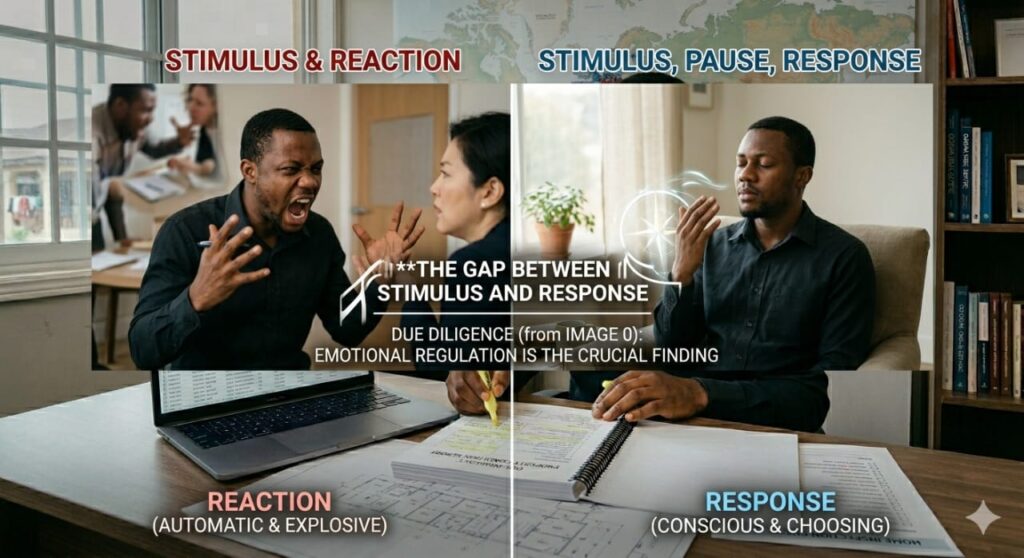
I’d spent years treating anger as something that demanded immediate action. I felt the heat rise in my chest, and I exploded. There was no gap between feeling and reacting. My therapist called this “emotional hijacking”, the amygdala taking over before the thinking brain has a chance to engage.
The first skill I learned was simply noticing the early warning signs. For me, anger starts in my chest, a tightness, a quickening heartbeat. My jaw clenches. My shoulders rise. My breathing becomes shallow. Before therapy, I didn’t notice these signals until I was already yelling. Now I watch for them constantly. The earlier I catch the wave, the more options I have.
The second skill was the pause. Between the trigger and my reaction, there is a gap. Most of us don’t see it; we go straight from stimulus to response. Anger management is about finding that gap and widening it. A single breath can create space. Counting to ten. Excusing myself to go to the bathroom. Anything that interrupts the automatic sequence.
I started using the pause constantly. In traffic, before responding to a frustrating email, and during difficult conversations with my partner. I’d feel the anger rise, and I’d take a breath. Not a dramatic, performative breath, just a quiet moment to let the initial surge pass. It felt awkward at first, like I was stalling. But the pause gave me something I’d never had: a choice.
The third skill was learning to name what was really happening. Most of my anger was actually something else. Fear. Hurt. Shame. Exhaustion. Feeling disrespected or unseen. When I paused long enough to ask, “What am I actually feeling?” the answers surprised me. The anger was a cover, a faster, safer emotion than the vulnerability underneath.
My therapist gave me an emotion wheel, and I used it constantly. I’d feel the rage building, and instead of exploding, I’d pull out the wheel and try to find a more precise word. Humiliated. Powerless. Anxious. Overwhelmed. Once I named the real emotion, the anger often lost its grip. I could address what was actually wrong instead of just lashing out.
The fourth skill was learning to communicate without attacking. I’d grown up in a household where arguments were battles to be won. I brought that template into every conflict. My therapist taught me a different way: “I statements, requests instead of accusations, and the difference between expressing feelings and blaming others.
Instead of “You never listen to me,” I learned to say “I feel unheard when I’m interrupted.” Instead of “You’re so selfish,” I tried “I need help with this, and I feel resentful when I’m doing it alone.” The words felt weak at first, vulnerable. But they worked. People didn’t get defensive. They listened. We actually solved problems instead of just hurting each other.
The fifth skill was understanding my triggers. Not the surface triggers, the person who cut me off, the coworker who missed a deadline, but the deeper patterns. I discovered that my anger was worst when I felt disrespected, when I perceived criticism, when I was tired or hungry, or already stressed. Knowing my triggers meant I could prepare. I could eat before a difficult conversation. I could postpone important discussions when I was already depleted.
The sixth skill was learning to soothe my nervous system. Anger is physiological, not just psychological. My body was flooding with stress hormones, and I needed physical strategies to calm down. Deep breathing. Progressive muscle relaxation. Going for a walk. Splashing cold water on my face. These weren’t逃避; they were tools. They signaled my nervous system that the threat had passed.
The seventh skill was about the stories I told myself. When someone wronged me, I’d spin narratives that fueled my fury. “They did this on purpose.” “They always do this.” “This proves they don’t respect me.” My therapist called this “cognitive distortion”, thinking that wasn’t accurate but felt true in the moment. Learning to question my assumptions, to look for evidence, to consider alternative explanations, this didn’t excuse bad behavior, but it kept me from catastrophizing and escalating.
The eighth skill was making amends. I’d hurt people with my anger. A lot of people. Apologizing was terrifying. I’d avoided it for years, telling myself that explaining my reasons was the same as apologizing. It wasn’t. A real apology is simple: I’m sorry for what I did. Here’s how I know it hurt you. Here’s what I’m doing to change. No excuses. No justifications. Just ownership.
I started with small apologies, then worked up to the bigger ones. Each one was humbling. Each one also repaired something I’d broken. People were more gracious than I deserved. Some relationships couldn’t be saved, and I had to accept that. But many could. The apologies didn’t erase the past, but they opened the door to a different future.
The ninth skill was self-compassion. I’d spent years hating myself for my anger, which only made me more volatile. Shame is not a good motivator for change; it just adds another layer of pain. My therapist taught me to hold myself accountable without destroying myself. I could acknowledge that I’d hurt people and also acknowledge that I was trying to change. Both things could be true.
The tenth skill was accepting that anger would still come. I’m not a different person now. I still feel rage. I still get triggered. But I respond differently. The anger rises, I notice it, I pause, I breathe, I choose. Sometimes I choose to walk away. Sometimes I choose to speak calmly. Sometimes I choose to revisit the conversation later when I’m regulated. The anger is still there, but it no longer drives the bus.
If you’re struggling with anger, know that you’re not alone. And know that change is possible. Not quick or easy, I’m years into this work and still learning, but possible. The relationships I’ve repaired, the peace I’ve found, the freedom from being ruled by my own reactivity, these are worth every difficult moment of the journey.
There’s so much more to learn about understanding and managing anger. Our website is filled with articles on emotional regulation, communication skills, and finding the right therapist. Head over and explore, because you don’t have to be controlled by your temper forever.
References
A systematic review in *Neuroscience & Biobehavioral Reviews* examines neural (amygdala, prefrontal cortex) and cognitive factors in anger, recommending mindfulness-based CBT as superior for reducing aggression over standard CBT.
Research in *Journal of Family Medicine and Primary Care* demonstrates that a six-session anger management program, covering relaxation, thought modification, and problem-solving, significantly lowers anger levels in adolescents aged 13-16.
The *Counseling Psychologist* applies principles of empirically supported interventions to anger management, finding moderate effect sizes for relaxation, cognitive restructuring, and skill-building techniques in adults.
Health.mil from the U.S. Department of Defense provides an anger control plan with tools like cue awareness, anger meters, timeouts, and relaxation to prevent escalation in military personnel.
Healthdirect.gov.au offers practical anger management strategies, including identifying triggers, spotting physical signs, and timeouts, as part of trusted government-funded mental health resources