
 Posted by
 The first time my mother forgot my name, I told myself it was just a slip. She was tired. She was distracted. She was getting older. Then she forgot it again the next day, and the day after that, and I could no longer pretend. Something was changing in her brain, something irreversible.
Dementia is an umbrella term for a group of symptoms affecting memory, thinking, and social abilities severely enough to interfere with daily functioning. Alzheimer’s disease is the most common type of dementia, accounting for sixty to eighty percent of cases. The difference between dementia and Alzheimer’s is the difference between a category and a specific condition. Every Alzheimer’s is a dementia, but not every dementia is Alzheimer’s.
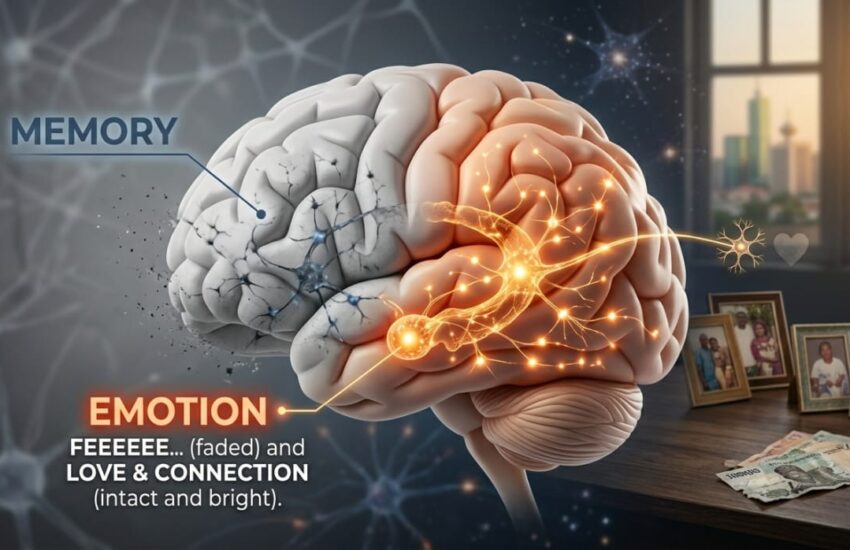
My mother had Alzheimer’s. I learned that the disease begins years before symptoms appear. Plaques and tangles form in the brain, disrupting communication between neurons. The damage starts in the hippocampus, which is responsible for memory. That is why the first symptom is often forgetfulness. Not losing keys, but forgetting what keys are for.
The early stage was the hardest to recognize. She repeated questions, struggled to find words, and became easily confused. She hid her symptoms well, and I let myself believe she was fine. I wish I had known then that early diagnosis matters. Medications can slow progression. Clinical trials offer hope. But people often wait too long to seek help because they mistake Alzheimer’s for normal aging. It is not normal aging. It is a disease.
By the middle stage, she needed help with daily activities. Bathing, dressing, cooking, managing finances, all became impossible. She became easily agitated and sometimes suspicious. She accused me of stealing from her, of leaving her alone, of not loving her. I knew these accusations were the disease, not my mother. Knowing did not make it hurt less. I learned to validate her feelings without arguing about the facts. “I hear you’re upset. I’m here. You’re safe.” Arguing only made her more distressed.
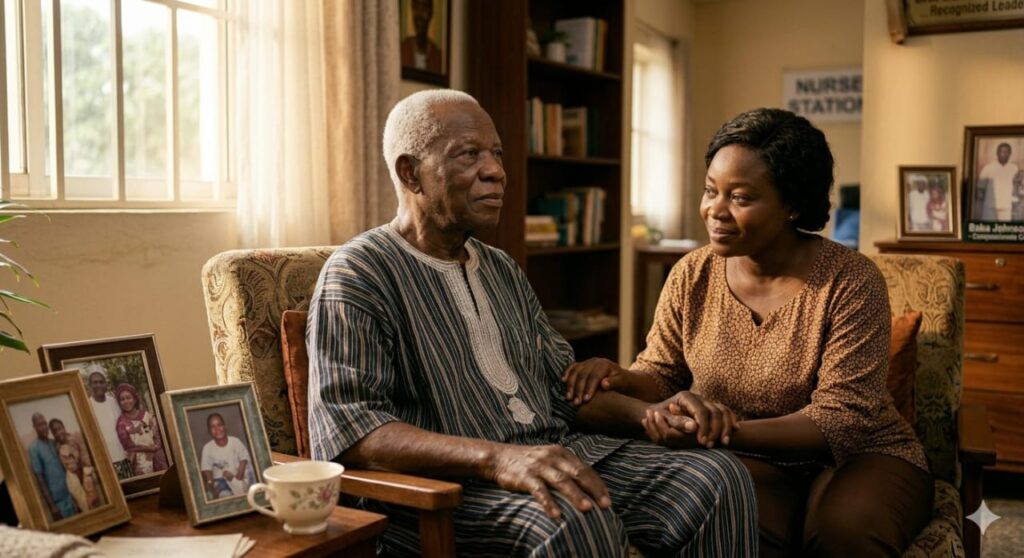
The late stage was quiet and heartbreaking. She lost the ability to speak in full sentences. She no longer recognized me most days, though sometimes a flicker of something familiar crossed her face. She needed help with everything, eating, moving, toileting. She spent most of her time in bed or in a chair, her eyes open but distant. I still spoke to her, held her hand, played her favorite music. I did not know if she heard me. I did it anyway.
One of the most difficult lessons was the communication shift. I learned to speak slowly, use simple sentences, and wait for her to process what I said. I learned to use her name before I spoke so she knew I was talking to her. I learned to watch her face for responses because her words had stopped coming. I learned that silence could be connection too.
I also had to accept that she could not always control her behavior. Incontinence, agitation, wandering, these were not choices. They were symptoms of her brain’s decline. I learned to adapt rather than scold. A waterproof mattress cover. Door alarms. A calm tone when she was upset. These adaptations kept her safe and preserved her dignity.
As her primary caregiver, I stopped being her child and became her parent in many ways. I reversed roles, bathing and feeding someone who had once bathed and fed me. That reversal was painful but necessary. She needed me. I showed up.
The support I found was uneven. Some staff understood dementia; others did not. The best caregivers spoke to her with respect, even when she could not answer. They gave her choices, even small ones. “Would you like your hair brushed or your teeth brushed first?” That respect made her final years bearable.
The Alzheimer’s Association, the National Institute on Aging, and the Family Caregiver Alliance were lifelines. They provided information, support groups, and practical guidance. I learned not to do this alone. Isolation is the enemy of caregivers. Connection is the antidote.
In the end, my mother died peacefully, surrounded by music and the people who loved her. She did not know our names anymore, but she knew we were there. Her body relaxed when we held her hand. She turned toward our voices. That is love. Love does not require recognition. It only requires presence.
If you are on this journey, do not wait to seek support. The road is long and hard, but you do not have to walk it alone. Start learning now. Start caring for yourself. Your loved one needs you whole, not broken.
There is so much more to learn about dementia and Alzheimer’s. Our website is filled with articles on early diagnosis, caregiving strategies, and finding the right support. Head over and explore, because knowing the difference between dementia and Alzheimer’s is just the beginning of understanding.
References
National Institute on Aging. (2025, May 31). *Alzheimer’s and dementia*. https://www.nia.nih.gov/health/alzheimers-and-dementia
Alzheimer’s Association. (n.d.). *Alzheimer’s & dementia*. https://www.alz.org/alzheimers-dementia
Centers for Disease Control and Prevention. (2025, February 2). *About dementia*. https://www.cdc.gov/alzheimers-dementia/about/index.html
World Health Organization. (2025, March 30). *Dementia*. https://www.who.int/news-room/fact-sheets/detail/dementia
Swerdlow, R. H., et al. (2025). 2025 Alzheimer’s disease facts and figures. *Alzheimer’s & Dementia, 21*(5), e12040760. https://pmc.ncbi.nlm.nih.gov/articles/PMC12040760/