
 Posted by
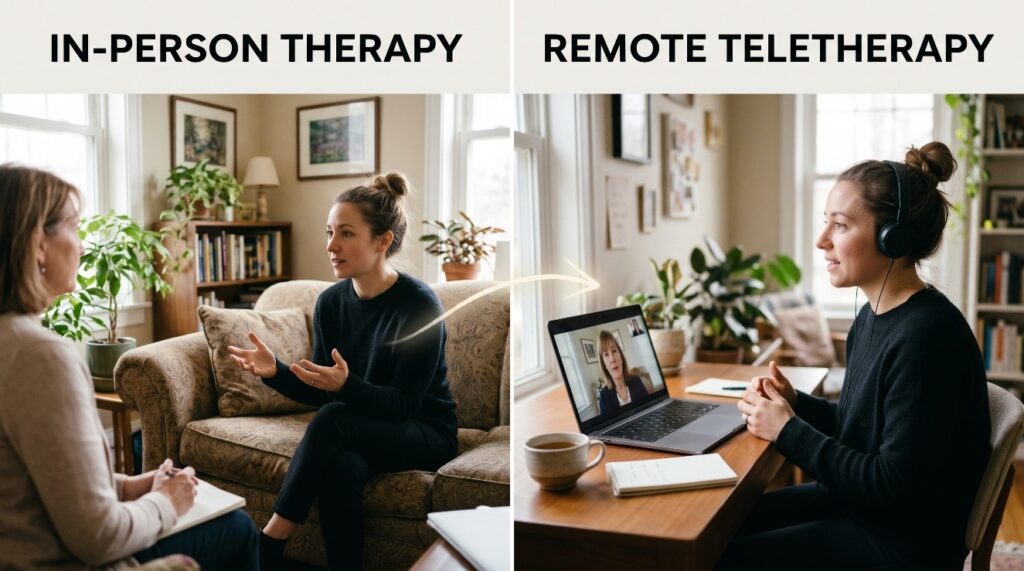
I was skeptical about therapy through a screen. I had been seeing my therapist in person for two years. We had built trust in that small office with the worn couch and the box of tissues on the table. The idea of moving our sessions to video felt like a downgrade. Then a family emergency forced me to relocate for three months. I could not see her in person. I could not imagine starting over with someone new. So I tried teletherapy. I was wrong about the screen.
Teletherapy is mental health care delivered remotely, usually through video calls, phone sessions, or secure messaging. It is not a new idea. Crisis hotlines have existed for decades. But the pandemic accelerated its adoption dramatically. What was once a niche option became a mainstream form of care. Today, teletherapy is available for individual therapy, couples therapy, family therapy, and group therapy. It is used to treat anxiety, depression, trauma, relationship issues, and many other conditions.
The first thing I learned is that teletherapy is not inferior to in-person therapy. Research consistently shows that teletherapy is as effective as in-person care for many mental health conditions. The therapeutic relationship can be just as strong through a screen. The work can be just as deep. The progress can be just as real. I had assumed that the physical presence of my therapist was essential. It was not. What mattered was her attention, her skill, and her care. All of that came through the screen.
The second thing I learned is that teletherapy requires adjustments. You cannot read body language the same way. You cannot see the full room. You cannot make eye contact in the same way, because the camera and the screen create a slight disconnect. But you can adapt. My therapist learned to ask more questions about what I was feeling in my body. I learned to be more explicit about my emotional state. We developed new ways of communicating that compensated for what was lost. In some ways, the adjustments made us more intentional. We could not take communication for granted.
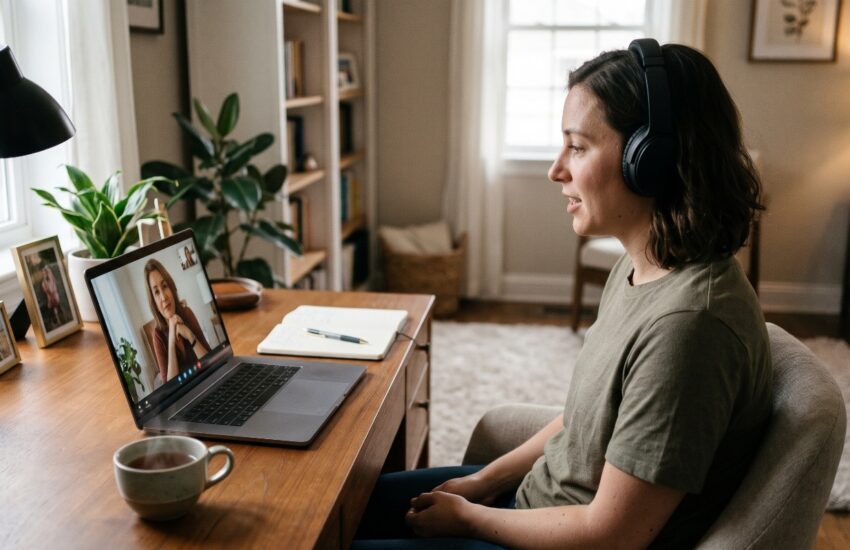
The fourth thing I learned is that teletherapy is private. I had worried about confidentiality. What if someone overheard? What if the connection was not secure? I learned that reputable teletherapy platforms use encryption and comply with HIPAA regulations. My therapist used a secure platform. I used headphones to protect my privacy. I chose a private room. The privacy was actually better than in-person therapy in some ways, because I was not sitting in a waiting room with other people. I was in my own space.
The fifth thing I learned is that teletherapy is not for everyone. Some people need the physical presence of another person to feel safe. Some people do not have reliable internet or a private space. Some people find the screen distracting or exhausting. Some therapeutic approaches are harder to deliver remotely, though most can be adapted. It is important to be honest about what works for you. If teletherapy does not feel right, that is not a failure. It is information.
The sixth thing I learned is that teletherapy has expanded access. I live in a rural area now. The nearest therapist who specializes in my condition is two hours away. Without teletherapy, I would have to drive four hours round trip every week, or I would have to settle for a therapist who was not the right fit. Teletherapy gave me access to the right therapist without the travel. That access is life-changing for people in rural areas, for people with disabilities, for people who cannot leave their homes, for people who live in areas with therapist shortages. Teletherapy is not just convenient. It is equitable.
The seventh thing I learned is that teletherapy requires boundaries. When your therapist is on a screen in your living room, it is easy to forget that you are in a professional relationship. I learned to treat my sessions like in-person appointments. I dressed as I would for an office visit. I sat in a dedicated space. I turned off notifications. I did not multitask. I gave the session my full attention, just as I would have in my therapist’s office. Those boundaries protected the work.
I still see my therapist in person sometimes. I still prefer the worn couch and the box of tissues. But teletherapy gave me continuity during a difficult time. It gave me access when I needed it most. It gave me proof that healing does not require a specific room. It requires a specific connection. And that connection can happen anywhere.
References
1.American Psychological Association. (2013). *Guidelines for the practice of telepsychology*. [https://www.apa.org/practice/guidelines/telepsychology](https://www.apa.org/practice/guidelines/telepsychology)
2. U.S. Department of Health and Human Services. (2024). *Individual teletherapy*. Telehealth.HHS.gov. [https://telehealth.hhs.gov/providers/best-practice-guides/telehealth-for-behavioral-health/individual-teletherapy](https://telehealth.hhs.gov/providers/best-practice-guides/telehealth-for-behavioral-health/individual-teletherapy)
3. Center for Connected Health Policy. (2026). *Defining telehealth for professional requirements*. [https://www.cchpca.org/topic/definitions-professional-requirements/](https://www.cchpca.org/topic/definitions-professional-requirements/)