
 Posted by
 I used to roll my eyes when anyone mentioned breathing exercises. Breathe? I was already breathing. That was the whole problem. I had been breathing my whole life without any instruction. What could I possibly learn?
Plenty, as it turned out. I learned that I had been breathing wrong for decades. Shallow, fast, chest-only breaths that kept my nervous system in a constant state of low-grade alert. I didn’t have an anxiety disorder. I had a breathing disorder. And fixing it changed everything.
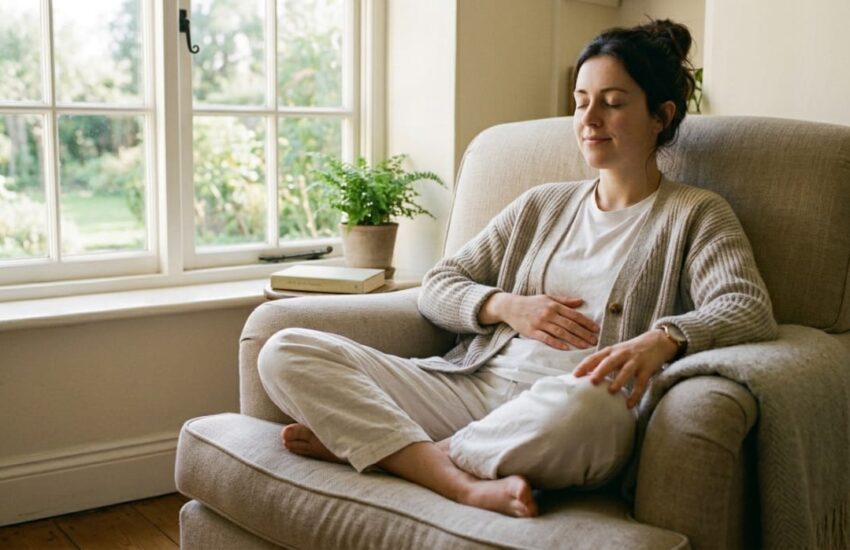
The first technique my therapist taught me was diaphragmatic breathing, or belly breathing. Lie on your back. One hand on your chest, one on your belly. Breathe in slowly through your nose. Feel your belly rise. Your chest should stay mostly still. Breathe out even more slowly through your mouth. Feel your belly fall.
I felt ridiculous. But I kept practicing. Five minutes every morning. Within a week, my baseline anxiety dropped. Within a month, I was doing belly breathing without thinking about it, even during stressful meetings. My body had learned a new default.
The second technique was box breathing, used by Navy SEALs to stay calm under fire. Inhale for four seconds. Hold for four seconds. Exhale for four seconds. Hold for four seconds. Repeat. The equal counts create a rhythm that the nervous system finds deeply soothing. I use box breathing before difficult conversations, during traffic jams, and whenever I feel panic rising.
The first time I tried box breathing during a panic attack, I didn’t think it would work. My heart was racing, my chest was tight, and the idea of counting to four felt absurd. But I did it anyway. In, two, three, four. Hold, two, three, four. Out, two, three, four. Hold, two, three, four. By the third round, my heart rate had slowed. By the fifth, the panic had passed. It felt like magic, but it was just physiology.
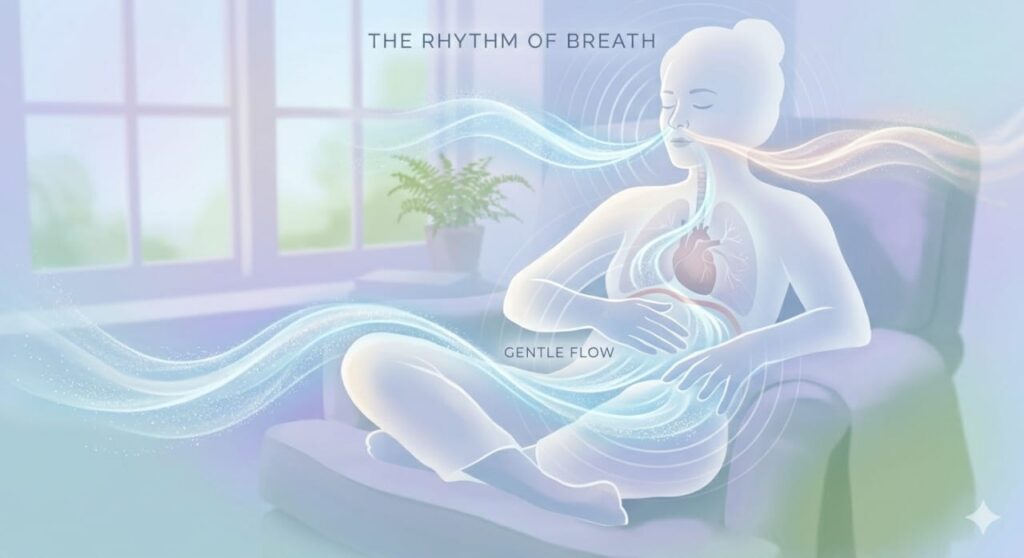
The third technique is 4-7-8 breathing, developed by Dr. Andrew Weil. Inhale through your nose for four seconds. Hold for seven seconds. Exhale through your mouth for eight seconds. The extended exhale activates the parasympathetic nervous system, the rest-and-digest response that counteracts stress. I use 4-7-8 breathing when I can’t sleep. By the fifth or sixth round, my body is ready for rest.
The fourth technique is alternate nostril breathing, or nadi shodhana. Use your thumb to close your right nostril. Inhale through your left nostril. Close your left nostril with your ring finger. Exhale through your right nostril. Inhale through your right nostril. Close it. Exhale through your left. Repeat. This technique balances the two hemispheres of the brain and creates a sense of deep calm. I use it when my mind is racing in circles.
The fifth technique is pursed-lip breathing. Inhale slowly through your nose. Then exhale through pursed lips, as if you’re blowing out a candle, making the exhale twice as long as the inhale. This technique keeps airways open longer and is especially helpful for people with lung conditions. My mother used pursed-lip breathing during her final months with COPD. It helped her feel less breathless and more in control.
The sixth technique is resonant breathing, which aims for a specific rate of about five to six breaths per minute. Inhale for five seconds. Exhale for five seconds. This frequency maximizes heart rate variability, a marker of nervous system health. I practice resonant breathing during my morning meditation. It sets a calm foundation for the entire day.
The seventh technique is breath counting. Sit comfortably. Breathe normally. After each exhale, count one. Count up to five, then start over. If you lose count, start over. This simple practice builds focus and quiets mental chatter. I use breath counting when my thoughts are spiraling and I can’t settle.
The eighth technique is extended exhale. Simply make your exhales longer than your inhales. Inhale for three seconds, exhale for six. Inhale for four, exhale for eight. The length doesn’t matter as much as the ratio. This is the quickest way I know to shift out of fight-or-flight mode. I use it before presentations, after bad news, and whenever I feel my shoulders creeping up toward my ears.
The ninth technique is sighing. A single deep inhale followed by a long, audible exhale. This is how animals naturally release tension. Try it now. Breathe in deeply, then let out a long sigh. Did you feel your shoulders drop? That’s your nervous system resetting. I sigh constantly throughout the day, especially when transitioning between tasks. It takes two seconds and clears the stress of whatever I just finished.
The tenth technique is simply noticing. You don’t have to change your breathing at all. Just pay attention to it. Notice where you feel the breath, nostrils, throat, chest, belly. Is it fast or slow? Shallow or deep? Warm or cool? This mindful awareness alone can shift your state, because attention regulates the nervous system.
If you’re new to breathing exercises, start small. One minute of belly breathing. Four rounds of box breathing. Three sighs. You don’t need special equipment or a quiet room. You can do these exercises anywhere, at your desk, in your car, in a crowded elevator.
The most important thing I learned is that breathing exercises are not about perfection. You’re not trying to achieve some ideal state. You’re just practicing returning to your breath, over and over, gently, without judgment. Some days it will feel easy. Some days it will feel impossible. Both are fine. Both are practice.
My anxiety hasn’t disappeared. I still have hard days. But now I have tools. When the spiral starts, I breathe. Box breathing on the subway. Belly breathing before a difficult call. Sighing as I walk through my front door after a long day. The breath is always with me, always available, always free. Yours is too.
There’s so much more to learn about using breath for regulation and healing. Our website is filled with articles on breathing techniques, nervous system health, and stress management. Head over and explore, because the most powerful tool for calming your mind is already inside you.
References
Cleveland Clinic. (2023, August 27). *Diaphragmatic breathing exercises & benefits*. https://my.clevelandclinic.org/health/articles/9445-diaphragmatic-breathing
American Lung Association. (n.d.). *Breathing exercises*. https://www.lung.org/lung-health-diseases/wellness/breathing-exercises
Balban, M. Y., Neri, E., Kogon, M. M., Weed, L., Nouriani, B., Jo, B., Holl, G., Zeitzer, J. M., Spiegel, D., & Huberman, A. D. (2023). Brief structured respiration practices enhance mood and reduce physiological arousal. *Cell Reports Medicine, 4*(1), 100895. https://doi.org/10.1016/j.xcrm.2022.100895
Headspace. (2023, October 23). *Breathing exercises to reduce stress*. https://www.headspace.com/meditation/breathing-exercises
Healthline. (2019, April 8). *10 breathing exercises to try when you’re feeling stressed*. https://www.healthline.com/health/breathing-exercise