
 Posted by
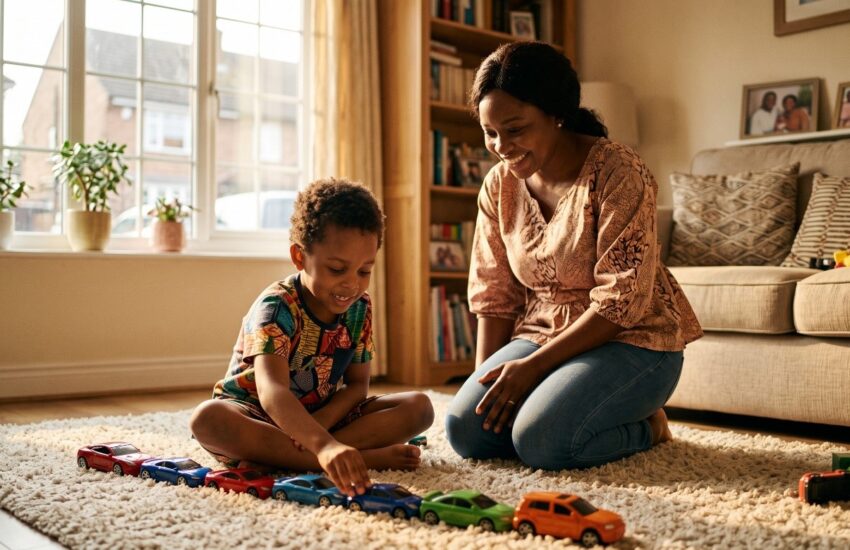
 My nephew was three years old when his parents first noticed something different. He did not respond to his name. He lined his toy cars in perfect rows instead of driving them around. He covered his ears when the blender ran. He did not point at things he wanted. He simply took your hand and placed it on the object. The pediatrician said to wait and see. His preschool teacher suggested a hearing test. It was my sister who finally pushed for an evaluation, and at four years old, my nephew was diagnosed with autism spectrum disorder.
Autism spectrum disorder is a developmental condition that affects how a person communicates, interacts socially, and experiences the world. It is called a spectrum because it looks different in every person. Some autistic individuals are nonverbal and need significant support. Others speak fluently, hold demanding jobs, and have rich relationships. Some have intellectual disabilities. Others have average or above-average intelligence. No two autistic people are the same, which is why the saying goes: if you have met one person with autism, you have met one person with autism.
The word “spectrum” is important. When my nephew was diagnosed, I pictured a linear scale from mild to severe. That is not how it works. Autism is more like a constellation of traits, each present to varying degrees. A person might have intense sensory sensitivities but strong verbal skills. Another might struggle with social cues but excel at pattern recognition. The label tells you very little about the individual. Only the person themselves can tell you what their experience is like.
The first thing I learned is that autism is not a disease. It cannot be cured, and it does not need to be. It is a different way of experiencing and processing the world. Many autistic adults describe their autism not as a burden but as an integral part of their identity. They do not want to be fixed. They want to be understood, accommodated, and respected.
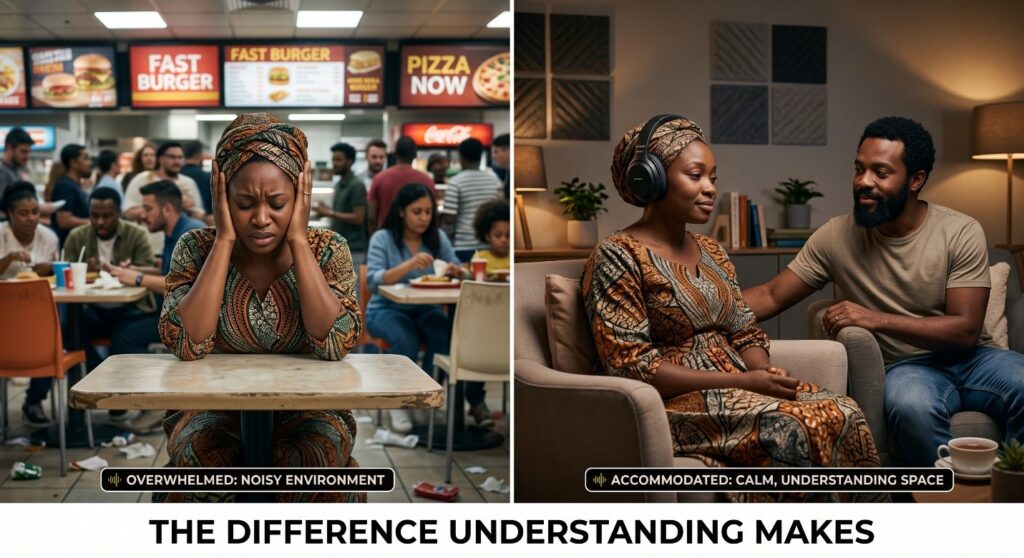
That does not mean autism does not come with challenges. My nephew struggles with transitions. A change in routine, even a small one, can trigger hours of distress. He has difficulty reading social cues and making friends. Loud noises and bright lights overwhelm him. He has meltdowns that are not tantrums but neurological overwhelm. These are real struggles, and they deserve real support.
But autism also comes with gifts. My nephew notices details that others miss. He remembers facts about dinosaurs with encyclopedic accuracy. He sees patterns in numbers that I cannot see. He is honest, direct, and deeply kind in his own way. He experiences joy intensely and shares it with abandon. His brain works differently, and that difference is not a deficit. It is a variation.
Early intervention made a profound difference for my nephew. Speech therapy helped him learn to communicate. Occupational therapy helped him manage sensory overload. Behavioral therapy helped him build skills for daily life. But the most important intervention was not therapy. It was acceptance. When his parents stopped trying to make him “normal” and started learning how to support him as he is, everything changed. His meltdowns decreased. His anxiety eased. He started to thrive.
I also learned that many autistic people, especially women, are diagnosed late or not at all. They learn to mask their traits, mimicking social behavior and suppressing their natural responses. This masking is exhausting and can lead to anxiety, depression, and burnout. The autistic community has taught me that diagnosis is not about labeling. It is about understanding, accommodation, and access to support.
If you are the parent or family member of a newly diagnosed autistic person, I want you to know that it is okay to grieve the life you imagined. That grief does not mean you do not love your child. It means you are human. But do not stay in that grief. Learn from autistic adults. Listen to their voices. Follow their lead. They are the experts on their own experience.
Autism is not a tragedy. It is a different way of being. With the right support and the right understanding, autistic people can live full, meaningful, and joyful lives. My nephew is eight now. He still lines up his cars. He still covers his ears when the blender runs. But he also tells me about his day, asks me questions about the stars, and hugs me goodbye with genuine affection. He is not a puzzle to be solved. He is a person to be known.
There is so much more to learn about neurodiversity and supporting autistic individuals. Our website is filled with articles on autism, sensory processing, and inclusive care. Head over and explore, because understanding starts with listening.
References
American Psychiatric Association. (2022). *Diagnostic and statistical manual of mental disorders* (5th ed., text rev.; DSM-5-TR). American Psychiatric Association Publishing.
Centers for Disease Control and Prevention. (2025, June 26). *Clinical testing and diagnosis for autism spectrum disorder*. [https://www.cdc.gov/autism/hcp/diagnosis/index.html](https://www.cdc.gov/autism/hcp/diagnosis/index.html)
Centers for Disease Control and Prevention. (2025, May 22). *Autism spectrum disorder articles*. [https://www.cdc.gov/autism/articles/index.html](https://www.cdc.gov/autism/articles/index.html)
Lord, C., Elsabbagh, M., Baird, G., & Veenstra-VanderWeele, J. (2018). Autism spectrum disorder. *The Lancet, 392*(10146), 508–520. [https://doi.org/10.1016/S0140-6736](https://doi.org/10.1016/S0140-6736)(18)31129-2
Kulage, K. M., Smaldone, A. M., & Cohn, E. G. (2014). How will DSM-5 affect autism diagnosis? A systematic literature review and meta-analysis. *Journal of Autism and Developmental Disorders, 44*, 1918–1932. [https://doi.org/10.1007/s10803-014-2065-2](https://doi.org/10.1007/s10803-014-2065-2)
American Psychiatric Association. (n.d.). *What is autism spectrum disorder?* [https://www.psychiatry.org/patients-families/autism/what-is-autism-spectrum-disorder](https://www.psychiatry.org/patients-families/autism/what-is-autism-spectrum-disorder)