
 Posted by
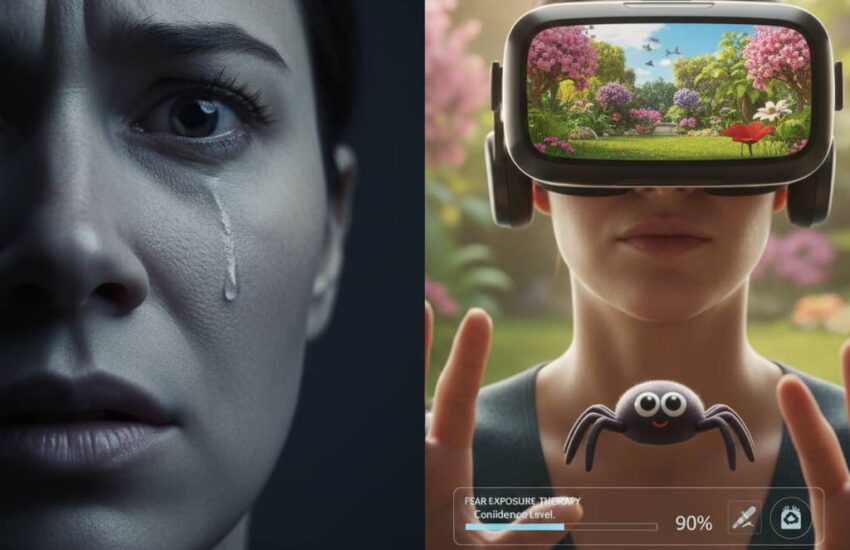
 Explore how virtual reality therapy is treating phobias, PTSD, anxiety, and pain. Learn about VR’s immersive technology that creates safe, controlled environments for healing. I remember watching a client, a military veteran, put on a headset. Minutes later, he was breathing steadily in a virtual supermarket, a place he hadn’t been able to enter for years due to crippling PTSD and anxiety. In that controlled, digital space, he wasn’t just talking about his fear; he was learning to be in it, to manage it, and to rewire his neural responses in real time. This is the transformative power of virtual reality therapy. It moves treatment from the abstract realm of conversation into the embodied, experiential domain. VR isn’t a futuristic gimmick; it’s a sophisticated therapeutic tool that uses immersive simulation to create profoundly safe spaces for confronting unsafe feelings.
The applications extend far beyond anxiety. For chronic pain management, VR acts as a powerful distractor, immersing patients in calming, engaging worlds that pull cognitive focus away from pain signals, a concept known as immersive distraction. In stroke or brain injury rehabilitation, VR environments gamify physical and cognitive exercises, making repetitive motor tasks engaging and providing real-time feedback on movement, which dramatically improves patient motivation and outcomes. For individuals on the autism spectrum, VR can safely simulate complex social scenarios for practice, like interpreting facial expressions or navigating a job interview. In each case, the technology provides a safe, repeatable, and measurable training ground for skills that are difficult or risky to practice in the unpredictable real world.
A crucial, and perhaps most profound, advantage of VR is its ability to create scenarios that are impossible in a traditional office. A therapist can’t easily recreate a battlefield, a plane’s cabin, or a crowded subway for exposure therapy. With VR, they can do so with meticulous detail. This allows for what’s called in virtuo exposure, which is often more accessible and less intimidating than *in vivo* (real-life) exposure at the start of treatment. Furthermore, the therapist can be a co-pilot in the experience, observing the patient’s reactions and providing guidance from within the same virtual space, strengthening the therapeutic alliance. The data collected, such as heart rate, gaze tracking, and movement, also provide objective biomarkers of progress, complementing the patient’s subjective report.
Virtual reality therapy represents a paradigm shift from *talking about* change to *experiencing* change. It provides a bridge between the safety of the therapist’s office and the challenges of the outside world. As the technology becomes more affordable and content more sophisticated, its role in mental and physical healthcare will only expand. It is not a replacement for the human connection at the heart of therapy, but a revolutionary tool that empowers therapists to guide their clients through healing experiences that were once unimaginable, proving that sometimes, the path to being more present in our real lives begins by fully immersing ourselves in a virtual one.
References
Botella, C., et al. (2022). The effectiveness of virtual reality exposure–based cognitive behavioral therapy for severe anxiety disorders: A meta-analysis. *Journal of Medical Internet Research, 24*(2), e26736. https://doi.org/10.2196/26736
Powers, M. B., & Emmelkamp, P. M. G. (2019). Virtual reality exposure therapy for anxiety and related disorders: A meta-analysis of randomized controlled trials. *Journal of Anxiety Disorders, 61*, 27-36. https://doi.org/10.1016/j.janxdis.2018.08.003
Fernández-Álvarez, J., et al. (2021). A meta-analysis of the efficacy of virtual reality and in vivo exposure for public speaking anxiety. *Clinical Psychology Review, 83*, 101935. https://doi.org/10.1016/j.cpr.2021.101935
Carl, E., et al. (2019). Virtual reality exposure therapy for anxiety and related disorders: A meta-analysis of randomized controlled trials. *Journal of Anxiety Disorders, 61*, 27-36. https://doi.org/10.1016/j.janxdis.2018.08.003
Zhou, Y., et al. (2025). Effectiveness of virtual reality therapy in the treatment of anxiety disorders: A meta-analysis. *Frontiers in Psychiatry, 16*, 1553290. https://doi.org/10.3389/fpsyt.2025.1553290