
 Posted by
 I grew up in a family that did not talk about mental health. Depression was not a medical condition; it was a personal failing. Anxiety was not a diagnosable disorder; it was weakness. Therapy was for white people, not for us. When I started struggling, I kept it hidden for years. I was ashamed. I was afraid. And I was not alone.
Minority mental health is not a niche issue. It affects millions of people who face barriers to care that others never encounter. Stigma, discrimination, language barriers, and a lack of culturally competent providers keep people from getting the help they need. The consequences are devastating: higher rates of untreated depression, anxiety, and suicide in many minority communities.
The first barrier I faced was stigma. In my culture, mental illness was seen as a character flaw. You did not go to therapy; you prayed harder. You did not take medication; you pulled yourself together. I internalized that message. When I finally told a family member I was struggling, they said, “You have nothing to be depressed about. Just be grateful.” I did not seek help for another two years.
The second barrier was language. English was not my first language. Finding a therapist who spoke my language and understood my cultural context felt impossible. I tried a few English-speaking therapists, but something was missing. They did not understand the cultural pressure I felt. They did not understand why I could not just “set boundaries” with my family. They were well-meaning, but they were not equipped.
The third barrier was representation. Every therapist I saw was white. Every intake form assumed a Western understanding of mental health. The diagnostic criteria did not account for cultural expressions of distress. I felt like I was being squeezed into a box that was never designed for me.
Research confirms what I experienced. People of color are less likely to receive mental health care than white people. When they do receive care, it is often of lower quality. Black individuals are more likely to be misdiagnosed with schizophrenia and less likely to receive appropriate treatment for depression. Asian Americans are the least likely to seek mental health services of any racial group. Latinx communities face language barriers and immigration-related fears that prevent them from accessing care. Those are not just statistics. They are lives. They are people who suffer in silence because the system was not built for them.
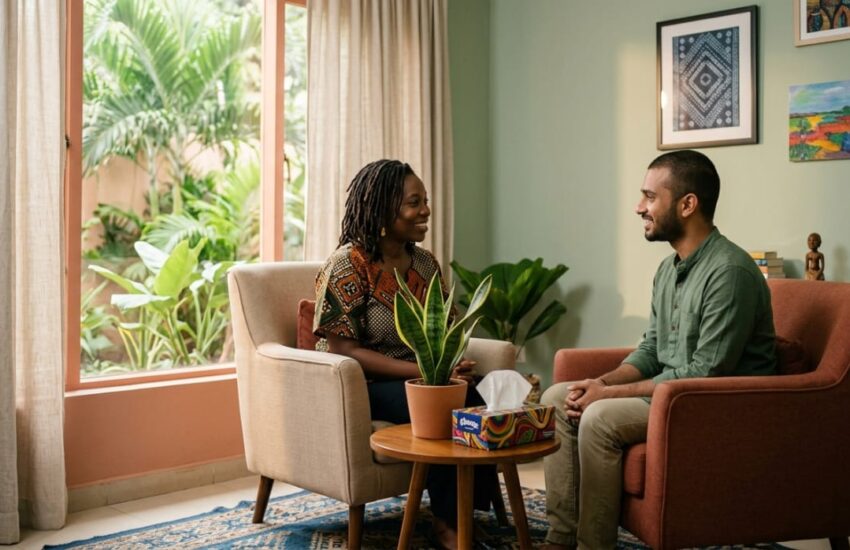
The turning point for me came when I found a therapist who specialized in minority mental health. She was not from my culture, but she had trained specifically in cultural competence. She did not assume my experiences were universal. She asked questions instead of assuming. She understood the role of family, faith, and community in my life. She did not tell me to abandon my values; she helped me navigate them.
That therapy saved my life. I started sleeping again. I stopped having panic attacks. I could finally name what I was feeling without shame. But it took me years to get there. Years I cannot get back. If you are from a minority community and struggling with mental health, I want you to hear this. You are not broken. You are not weak. You are not alone. The barriers are real, but there are also resources.
Start by looking for therapists who specialize in minority mental health. Many directories now allow you to filter for race, ethnicity, language, and cultural background. Organizations like the National Alliance on Mental Illness and the American Psychological Association have resources specifically for minority communities. If you cannot find a therapist who shares your background, look for one who is culturally competent. Ask them directly about their experience working with people from your community.
If you are a provider, ask yourself how you can serve minority clients better. Cultural competence is not optional. It is essential. Seek training, learn about implicit bias, and adapt your approach to meet the needs of the communities you serve. If you are a family member, do not dismiss your loved one’s struggles. Mental illness is not a character flaw. It is a medical condition. Your support, not your judgment, is what they need.
Minority mental health is not a niche issue. It is a justice issue. It is a public health crisis. It deserves attention, funding, and action. There is so much more to learn about mental health in minority communities. Our website is filled with articles on finding culturally competent care, navigating stigma, and advocating for better services. Head over and explore, because everyone deserves care that sees them fully.
References
National Library of Medicine. (2011, March 22). *Cross-cultural barriers to mental health services in the United States*. https://pmc.ncbi.nlm.nih.gov/articles/PMC3574791/
Loma Linda University. (2024, July 9). *Recognizing minority mental health barriers: an honest conversation*. https://news.llu.edu/health-wellness/recognizing-minority-mental-health-barriers-honest-conversation
CARI Journals. (2024, March 28). *Mental health stigma in minority communities*. https://carijournals.org/journals/IJHSS/article/view/1784
BMJ Mental Health. (2025). “I am not a priority”: Ethnic minority experiences of navigating mental health services. *BMJ Mental Health, 28*(1), e301481. https://mentalhealth.bmj.com/content/28/1/e301481
ScienceDirect. (2026, March 14). Perceived need for care and treatment-seeking behaviour among ethnic minority groups. *Journal of Affective Disorders, 350*, S0165032725023432. https://www.sciencedirect.com/science/article/pii/S0165032725023432