

 Posted by
 My brother lived by chaos. He slept when he wasn’t tired. Ate when he remembered. Socialized impulsively or not at all. His bipolar mood episodes followed no pattern because his life had no pattern. Medications helped, but he still cycled unpredictably. Then his therapist introduced something called interpersonal and social rhythm therapy, or IPSRT.
I was skeptical. How could a schedule help bipolar disorder more than medication? But the research is compelling. IPSRT was developed specifically for bipolar disorder and has been proven to extend well periods and reduce relapse.
The core idea is simple: bipolar disorder disrupts biological rhythms. Sleep, appetite, energy, and social activity all become irregular. Those irregularities then trigger mood episodes. It’s a vicious cycle. IPSRT interrupts that cycle by stabilizing daily routines and addressing relationship stress that destabilizes them.
The first step was a social rhythm metric. My brother tracked his daily activities hour by hour for two weeks. When he woke, when he ate, when he talked to friends, when he went to bed. The chart was chaos. No two days looked the same. No wonder his mood couldn’t stabilize.
My brother resisted routine at first. He called it boring. Prison-like. But his therapist started small. Just one anchor: a regular bedtime. No phones after 11 PM. Lights out by midnight. It took a week, but he started falling asleep more easily. Then they added a regular wake time. Then regular meal times. Each small anchor stabilized his circadian rhythms.
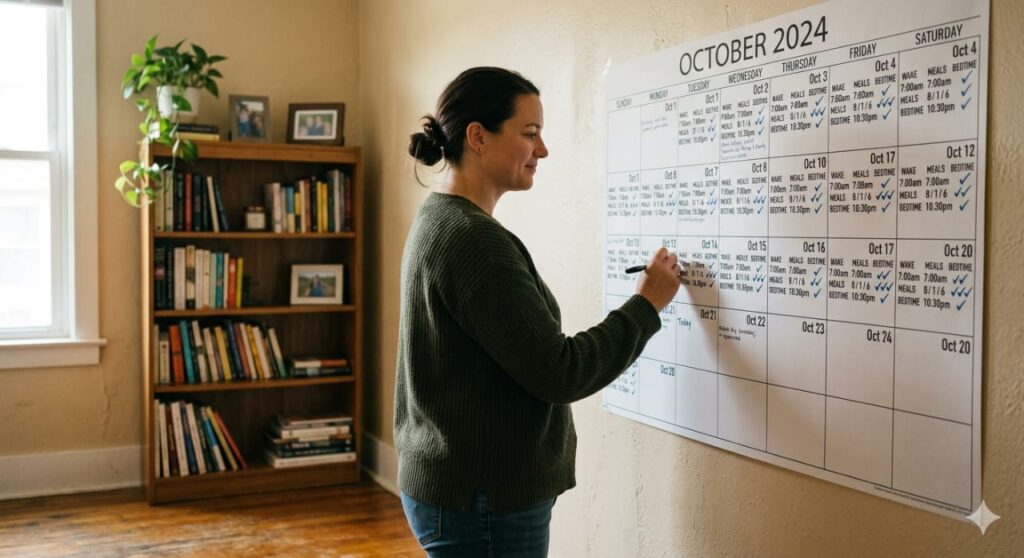
Within a month, his energy was more predictable. He wasn’t staying up until 3 AM. He wasn’t sleeping until noon. His body started producing melatonin and cortisol on a predictable schedule. Those hormones directly affect mood stability. He wasn’t just feeling better. His biology was changing.
The interpersonal part addressed relationships that disrupted his routines. My brother had a friend who called late at night to vent. Those calls triggered late bedtimes and sometimes manic energy. His therapist helped him set a boundary. No calls after 10 PM. The friend was hurt at first. But my brother stayed stable. The friendship survived.
IPSRT also addressed grief, role transitions, and relationship conflicts. My brother had never processed our father’s death. He avoided it by staying busy and staying up. In therapy, he finally talked about the loss. The grief work was painful, but it reduced his need to stay constantly active. He could rest without guilt.
One of the most powerful tools was a social rhythm chart. My brother plotted his mood alongside his daily activities. Over time, he could see the patterns. A late night often preceded a high mood. A skipped meal often preceded irritability. He learned to treat routine disruptions as early warning signs, not random events.
IPSRT doesn’t replace medication. My brother still takes mood stabilizers. But the therapy adds something medication cannot. It gives him agency. He can’t control his genetics, but he can control his bedtime. He can’t eliminate stress, but he can manage his response. Those small choices add up.
The evidence backs this up. Studies show that IPSRT significantly extends time between mood episodes. Patients who learn to stabilize their routines have fewer hospitalizations and better quality of life.
Not everyone can access IPSRT. It requires a trained therapist, and not all insurance plans cover it. But even without formal therapy, you can apply its principles. Start with one regular anchor: bedtime. Then add wake time. Then meals. Track your mood alongside your activities. Look for patterns.
My brother has been stable for eighteen months now. That’s the longest period in his adult life. He still has hard days. He still takes medication. But he also goes to bed at midnight, eats three meals, and sees his late-night friend only on weekends. That’s not boring. That’s freedom.
There’s so much more to learn about bipolar disorder treatment. Our website is filled with articles on IPSRT, medication, and lifestyle management. Head over and explore, because stability is possible, one routine at a time.
References
Frank, E., Swartz, H. A., & Kupfer, D. J. (2020). *Efficacy of the interpersonal and social rhythm therapy (IPSRT) in bipolar disorder: A review*. *Frontiers in Psychiatry*. https://pmc.ncbi.nlm.nih.gov/articles/PMC7061484/
Frank, E. (n.d.). *Interpersonal and social rhythm therapy (IPSRT)*. https://ipsrt.org
Frank, E., et al. (2005). Two-year outcomes for interpersonal and social rhythm therapy in individuals with bipolar disorder. *Archives of General Psychiatry, 62*(7), 996–1004. https://jamanetwork.com/journals/jamapsychiatry/fullarticle/1108410
Frank, E., Kupfer, D. J., Thase, M. E., et al. (2005). *Interpersonal and social rhythm therapy: An intervention addressing rhythm dysregulation in bipolar disorder*. *Bipolar Disorders, 7*(Suppl 2), 1–14. https://pmc.ncbi.nlm.nih.gov/articles/PMC3202498/
Interpersonal and Social Rhythm Therapy (IPSRT) Overview. (n.d.). https://ipsrt.org/overview/