
 Posted by
 Learn how attachment theory explains relationship patterns throughout life. Discover the four attachment styles and how early bonds impact adult relationships, parenting, and emotional health. The way we connect with others, how we seek comfort, handle conflict, and experience love, often feels deeply personal and innate. Yet, much of this emotional blueprint is quietly drawn in our earliest years. Attachment theory, pioneered by psychologist John Bowlby and expanded by Mary Ainsworth, provides a powerful framework for understanding this process. It proposes that the bonds we form with our primary caregivers in infancy create a lasting internal model for how we view ourselves, others, and the world of relationships. This isn’t about assigning blame to parents, but about recognizing patterns that illuminate why we love, trust, and relate the way we do.
At its core, attachment theory is about safety and survival. Infants are hardwired to seek proximity to a caregiver when frightened, ill, or distressed. A caregiver who is consistently responsive, soothing the cry, offering a hug, meeting the need, teaches the child a profound lesson: the world is safe, I am worthy of care, and others can be relied upon. This secure base allows the child to explore the world confidently, knowing a safe haven exists to return to. Conversely, inconsistent, intrusive, or neglectful care teaches a different set of lessons: the world is unpredictable, my needs might not be met, and others are unreliable. These early experiences form the foundation of our attachment style, a characteristic way of relating in close relationships that tends to persist into adulthood.
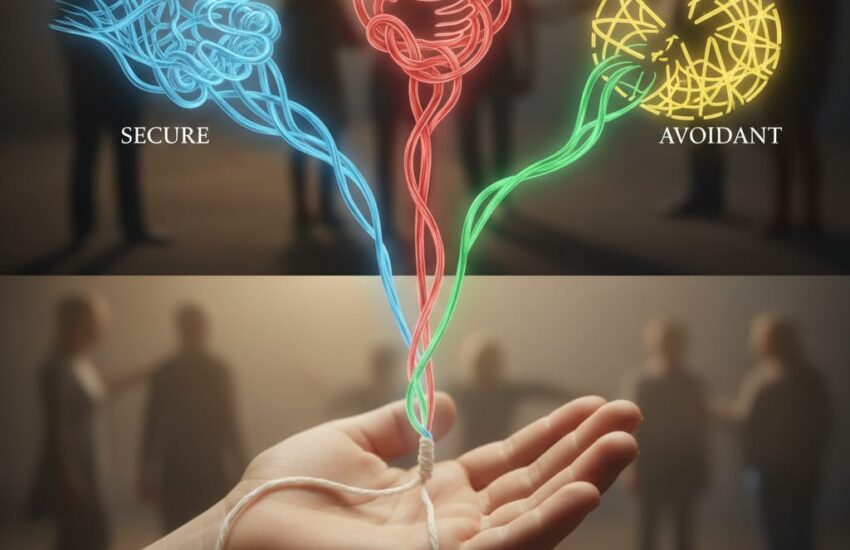
Researchers generally identify four primary adult attachment styles that stem from these early patterns. Secure attachment is the gold standard, characterized by comfort with intimacy, trust in partners, healthy independence, and effective communication of needs. Anxious-preoccupied attachment often develops from inconsistent care. Adults with this style crave extreme closeness, fear abandonment, are hyper-vigilant to relationship threats, and may be seen as “clingy” or needy. Avoidant-dismissive attachment typically stems from emotionally distant or rejecting care. These adults highly value independence, suppress emotional needs, feel uncomfortable with intimacy, and may pull away when a relationship gets too close. Finally, fearful-avoidant (or disorganized) attachment, often arising from frightening or traumatic care, creates a push-pull dynamic of wanting closeness but deeply fearing it, leading to chaotic and unstable relationships.
Understanding your attachment style is not a life sentence; it is a map for self-awareness and growth. This framework helps explain recurring relationship patterns: why you might pick emotionally unavailable partners, fear commitment despite wanting it, or feel constant anxiety about a stable relationship. It also profoundly impacts parenting, as we often unconsciously replicate or react against the attachment patterns we experienced. The great hope of attachment theory lies in its concept of earned security. Through introspection, therapy, and consistently experiencing healthy, secure relationships (with friends, partners, or a therapist), individuals can develop new internal working models. They can learn to identify their triggers, communicate needs more effectively, and build the secure bonds they may have missed in childhood.

Ultimately, attachment theory offers a compassionate lens through which to view our relational selves. It moves us from asking “What is wrong with me?” to asking “What did I learn about connection, and how can I learn anew?” It validates that our longing for secure, loving bonds is fundamental, not weak. By understanding the invisible architecture of our earliest bonds, we gain the power to renovate it, to build relationships based on present-day security, trust, and mutual respect, rather than being solely guided by the blueprints of our past.
References
Bowlby, J. (1969). *Attachment and loss: Vol. 1. Attachment*. Basic Books. (Foundational text establishing attachment as an evolutionary survival mechanism formed in infancy through caregiver responsiveness)
Ainsworth, M. D. S., Blehar, M. C., Waters, E., & Wall, S. (1978). *Patterns of attachment: A psychological study of the strange situation*. Lawrence Erlbaum Associates. https://doi.org/10.4324/9780203758045 (Identifies secure, anxious-ambivalent, avoidant, and disorganized styles via empirical observation)
Britannica Editors. (2025). *Attachment theory*. Encyclopædia Britannica. Retrieved from https://www.britannica.com/science/attachment-theory
NSPCC Learning. (2021). *Attachment and child development*. National Society for the Prevention of Cruelty to Children. Retrieved from https://learning.nspcc.org.uk/child-health-development/attachment-early-years
Cassidy, J., & Shaver, P. R. (Eds.). (2016). *Handbook of attachment: Theory, research, and clinical applications* (3rd ed.). Guilford Press. (Comprehensive review linking early bonds to lifelong emotional regulation and relationships)