
 Posted by
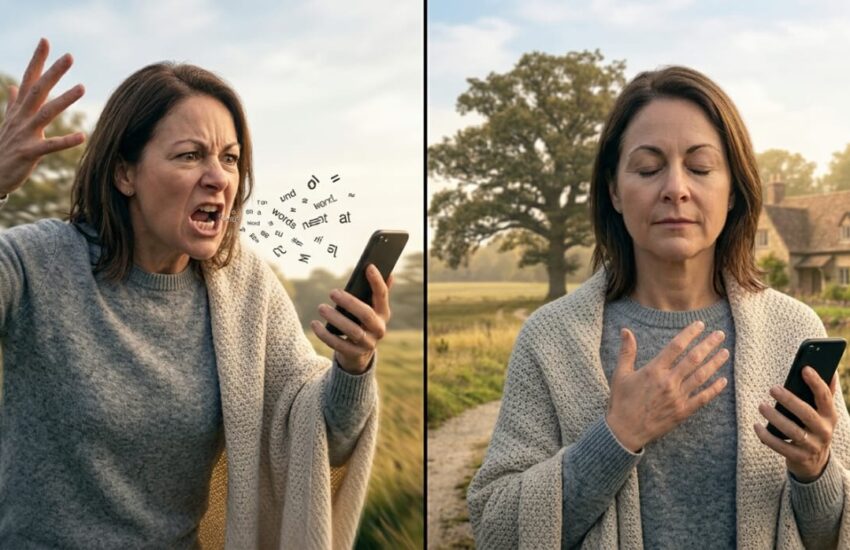
 I used to think I was just a passionate person. When I felt joy, I was ecstatic. When I felt anger, I exploded. When I felt sadness, I collapsed. My emotions were intense, overwhelming, and completely in charge. I didn’t regulate them; they regulated me.
The wake-up call came during an argument with my partner. I’d said something cruel in the heat of anger, something I didn’t even mean. Watching the hurt on their face, I realized I had a problem I couldn’t explain away as passion or intensity. I was reactive. And my reactivity was damaging the people I loved.
That realization sent me to therapy, where I first encountered the concept of emotional regulation. I’d assumed regulation meant controlling feelings, suppressing them, pretending they didn’t exist. My therapist gently corrected me.
Regulation, she explained, isn’t about getting rid of emotions. It’s about managing your response to them. It’s the difference between being driven by a feeling and choosing how to express it. Think of emotions like waves. You can’t stop the ocean from producing them. But you can learn to surf instead of being pulled under.
The first skill I learned was simply naming what I was feeling. This sounds absurdly simple, but I was terrible at it. I knew I felt “bad” or “upset” or “worked up,” but I couldn’t distinguish between anger and fear, between sadness and shame, between anxiety and excitement. My therapist gave me an emotion wheel, a circular chart with dozens of feeling words, and I used it constantly. When I felt something intense, I’d pull out the wheel and try to pinpoint the exact emotion.

What I discovered surprised me. Much of what I called anger was actually fear. Much of what I called sadness was actually exhaustion. The vague “bad” feeling was often a mix of several emotions at once. Naming them didn’t make them disappear, but it gave me distance. I wasn’t just overwhelmed; I was feeling scared and tired and frustrated, and those were specific problems I could address.
The second skill was recognizing the physical signs of an emotional wave before it crested. My therapist taught me to scan my body for early warnings. A tight chest before anger. A hollow stomach before fear. Heavy limbs before sadness. When I noticed these signals early, I had a chance to respond before I was fully flooded. I could take a breath, step away, choose a different path.
This took practice. In the beginning, I only noticed the physical signs after I’d already exploded. But over time, I got faster. I’d feel my chest tighten and think, “Ah, there’s anger. I have a few seconds to decide what to do with this.” Those few seconds became everything.
The third skill was the pause itself. Between feeling an emotion and acting on it, there is a gap. Most of us don’t notice the gap; we go straight from trigger to reaction. Emotional regulation is about finding that gap and widening it. A simple breath can do this. Counting to ten. Excusing yourself to the bathroom. Anything that interrupts the automatic sequence.
I started using the pause constantly. Before responding to a frustrating email. Before answering a critical question. Before reacting to something my partner said that stung. I’d take a breath, sometimes two, and ask myself: What am I feeling? What do I actually need right now? What response would serve me best? The answers weren’t always clear, but the pause made space for them to emerge.
The fourth skill was distress tolerance, the ability to ride out intense emotions without making them worse. I’d always believed that when I felt something strongly, I had to act immediately. My therapist taught me that emotions are not emergencies. They are uncomfortable, sometimes agonizingly so, but they pass. The average emotion, she said, lasts ninety seconds if you don’t feed it with thoughts and reactions.
I tested this. When anger rose, I’d notice it, breathe, and wait. Within a minute or two, the intensity would start to fade. Not disappear entirely, but become manageable. I wasn’t suppressing the anger; I was letting it move through me instead of grabbing onto it and amplifying it with stories and justifications.
The fifth skill was building positive emotions deliberately. Emotional regulation isn’t just about managing the hard stuff; it’s about cultivating the good stuff too. I started scheduling small pleasures—a walk outside, a call with a friend, a few minutes with a favorite song. These weren’t rewards for being productive; they were medicine. Positive emotions build resilience, making the difficult ones easier to handle when they arrive.
Cognitive skills came next. My therapist helped me identify the thoughts that fueled my emotional reactions. Catastrophizing, mind reading, all-or-nothing thinking, these cognitive distortions turned small triggers into massive storms. When I learned to question my thoughts, my emotions followed. The situation hadn’t changed, but my interpretation had, and that changed everything.
I also learned about emotional triggers, specific people, situations, or topics that reliably set me off. Some triggers were obvious; others surprised me. Once I identified them, I could plan ahead. If I knew a certain conversation would be hard, I could prepare myself, schedule it at a good time, build in breaks. I stopped walking into emotional ambushes because I’d mapped the terrain.
The most important lesson was self-compassion. I’d been so ashamed of my emotional intensity that I’d tried to fight it, which only made it worse. My therapist taught me to treat myself like I’d treat a friend who was struggling. Not “What’s wrong with you?” but “This is hard. Of course you’re feeling this way. Let’s figure it out together.” That gentleness, extended to myself, was more regulating than any technique.
I still feel things intensely. That hasn’t changed, and honestly, I don’t want it to. My emotions are part of who I am. But they no longer drive the bus. I feel anger rise, and I can pause. I feel fear grip my chest, and I can breathe. I feel sadness settle in, and I can let it be without drowning in it. The waves still come. But I’ve learned to surf.
If you struggle with emotional intensity, know that regulation is a skill, not a personality trait. You can learn it at any age. It takes practice, patience, and often professional support. But the freedom on the other side, the freedom to feel without being controlled, to respond instead of react is worth every difficult moment of learning.
There’s so much more to learn about understanding and working with your emotions. Our website is filled with articles on emotional regulation, therapy approaches, and building resilience. Head over and explore, because you deserve to feel your feelings without being ruled by them.
References
Gross, J. J. (2015). Emotion regulation: Current status and future prospects. *Psychological Inquiry*, *26*(1), 1–26. https://www.simplypsychology.org/emotional-regulation.html
McRae, K., & Gross, J. J. (2020). Emotion regulation. *Emotion*, *20*(1), 1–6. https://positivepsychology.com/emotion-regulation/
Harvard Health Publishing, Harvard Medical School. (2024, August 7). *Self-regulation for adults: Strategies for getting a handle on emotions and behavior*. https://www.health.harvard.edu/mind-and-mood/self-regulation-for-adults-strategies-for-getting-a-handle-on-emotions-and-behavior
University of California, San Francisco, Department of Psychiatry. (n.d.). *Emotion regulation skills* [PDF]. https://psychiatry.ucsf.edu/sites/psych.ucsf.edu/files/EMOTION%20REGULATION%20SKILLS%20MANUAL.pdf
Kouvonen, A., et al. (2023). Emotional regulation strategies in daily life: The intensity of emotions and the application of five ERS. *PMC*, *PMC10460911*. https://pmc.ncbi.nlm.nih.gov/articles/PMC10460911