
 Posted by
 I was the common denominator. Every romantic relationship I had ended the same way, distant, then tense, then silent. Friendships faded after a certain point. Even family gatherings left me feeling misunderstood and alone. I blamed everyone else, of course. They were too needy, too distant, too critical, too something. The problem was always them.
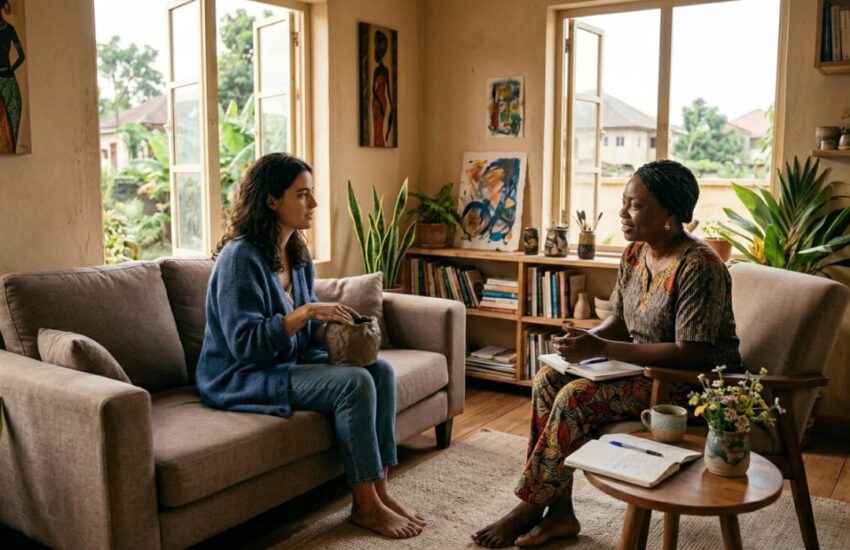
Then I started therapy, and my therapist asked a question that stopped me cold: “What if the common factor in all these relationships isn’t everyone else? What if it’s you?” I was offended at first. But I stayed. And what I discovered in that room changed how I connect with everyone in my life.
The first thing therapy taught me was that I didn’t know how to be vulnerable. I thought I did. I shared my opinions, my frustrations, my stories. But real vulnerability, the kind that says “I need you” or “I’m scared” or “I don’t know how to handle this”, that was terrifying. I’d learned early that showing need was dangerous. So I kept people at a comfortable distance, then blamed them for not being close enough.
My therapist helped me see this pattern not as a character flaw but as a survival strategy that had outlived its usefulness. We practiced vulnerability in small doses. I started saying what I actually needed, not what I thought I should need. I started admitting when I was hurt instead of pretending I didn’t care. It was terrifying. But slowly, the people around me started responding differently.
They could finally see me, because I was finally letting them. The second lesson was about boundaries. I had them backwards. I built walls when I felt threatened, silence, withdrawal, the cold shoulder, but I had no boundaries around my own time, energy, or needs. I said yes to everything, then resented everyone. I gave until I was empty, then blamed others for taking.
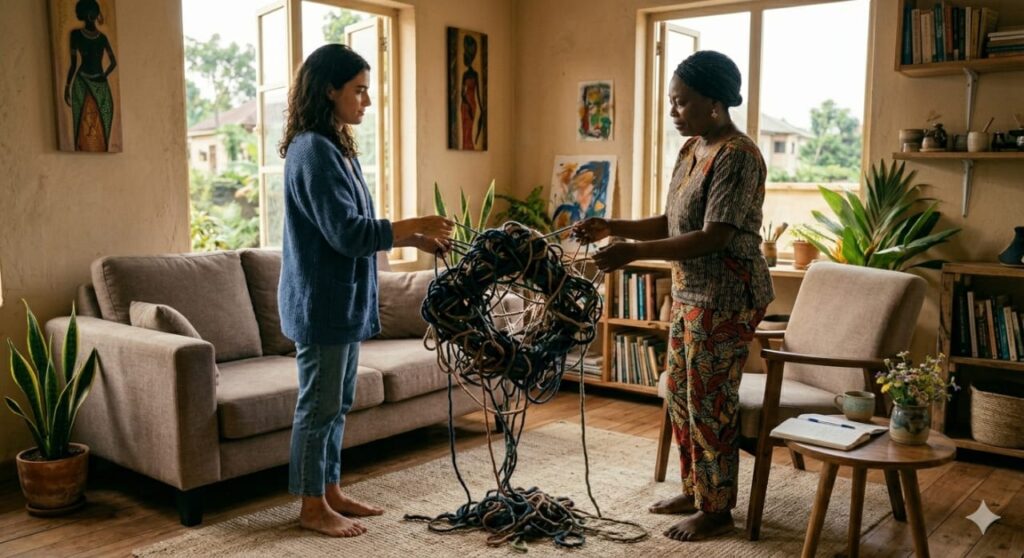
Therapy taught me that boundaries aren’t walls. They’re doors, doors that let people know how to enter your life respectfully. I learned to say no without guilt. I learned to ask for what I needed. I learned that people who love you will respect your limits, and people who won’t aren’t worth keeping close.
The third discovery was about communication. I thought I was a good communicator because I talked a lot. But talking isn’t communicating. Communicating is being understood. And I had no idea how often I was being misunderstood.
My therapist introduced me to concepts I’d never considered, like the difference between intent and impact. I might intend to express concern, but if my words land as criticism, the impact matters more than my intent. I learned to ask, “How did that land for you?” instead of assuming. I learned to listen without planning my response. I learned to pause when I felt triggered, to ask for clarification instead of assuming the worst.
These skills didn’t come naturally. I practiced them in session, role-playing conversations with my therapist, messing up, trying again. Then I practiced them in real life, with people who loved me enough to be patient. Slowly, the conflicts that used to spiral out of control started de-escalating. I could be heard without raising my voice. I could disagree without destroying connection.
The most surprising thing therapy taught me was about my attachment style. I’d never heard of attachment theory before, but learning about it was like someone handed me a map to my own heart. I was what therapists call anxiously attached, I craved closeness but feared abandonment, so I chased and pulled away in an endless loop that exhausted everyone.
Understanding this didn’t excuse my behavior, but it explained it. I could see where it came from, childhood experiences I’d never processed, messages I’d absorbed about love being conditional. And with that understanding, I could start to change. I could notice when I was reacting from old fear instead of present reality. I could soothe myself instead of demanding that my partner soothe me. I could choose different responses.
Therapy also helped me see my role in conflicts. I’d always seen myself as the victim, the misunderstood one, the person who was just trying to love and being rejected. My therapist gently challenged this narrative. She asked me to look at my own contributions, the passive aggression, the unspoken expectations, the way I punished with silence.
This was painful to see. But owning my part was liberating. If I was contributing to the problem, I could also contribute to the solution. I didn’t have to wait for everyone else to change. I could start changing myself, and that alone could shift the whole dynamic.
I also learned to choose better people. Therapy helped me see patterns I’d been blind to, the way I was drawn to people who confirmed my worst fears about myself, the way I mistook intensity for intimacy, the way I confused anxiety with love. I started making different choices. Slower choices. Choices based on character, not just chemistry. The relationships that resulted were less dramatic but infinitely more nourishing.
One of the hardest lessons was about letting go. Some relationships couldn’t be repaired. Some people weren’t willing to meet me halfway. Therapy helped me grieve those losses without collapsing into them. It helped me see that walking away from something that isn’t working isn’t failure; it’s wisdom. I learned to hold love and boundaries together, to care deeply while also protecting my peace.
My therapist never told me what to do. She never said “leave him” or “stay.” Instead, she helped me get quiet enough to hear my own voice. She helped me clarify my values, identify my needs, and make choices aligned with who I wanted to be. The answers were inside me all along. I just needed someone to help me find them.
If you’re struggling in your relationships, therapy can help. Not by making you better at manipulating others into meeting your needs, but by helping you understand yourself, your patterns, your triggers, your fears, your hopes. When you know yourself, you can show up differently. You can communicate more clearly. You can set boundaries without guilt. You can choose people who are capable of the kind of connection you deserve.
I still mess up. I still get triggered. I still sometimes fall into old patterns. But now I have tools. I have awareness. I have a relationship with myself that is kinder than it used to be. And that self-relationship, the one therapy helped me build, is the foundation for every other relationship I have. You don’t have to be the common denominator in broken relationships forever. You can be the one who changes the pattern. And therapy can help you do it.
There’s so much more to learn about building healthy connections. Our website is filled with articles on relationships, communication, and personal growth. Head over and explore, because stronger relationships start with understanding yourself.
References
Smith, R. A. (2024, March 13). *When you’re the only one trying: Therapy for women managing relationships alone*. Rebecca A. E. Smith, PhD. https://www.rebeccaaesmithphd.com/blog/when-youre-the-only-one-trying-therapy-for-women-managing-relationships-alone
David T. Zall, PhD. (n.d.). *Individual relationship therapy: Can one person improve a relationship?* https://www.davidtzall.com/individual-relationship-therapy-can-one-person-improve-a-relationship
Cobb, N. (n.d.). *Change starts with yourself*. https://www.nathancobb.com/Start-With-Yourself.html
Beer, N. (2021, November 4). *People who change themselves to get love – Chameleon in relationships*. https://nicolabeer.com/blog/people-who-change-themselves-to-get-love/
The Anxious Overachiever. (2023, August 15). *The trap of changing yourself to change others*. https://theanxiousoverachiever.substack.com/p/the-trap-of-changing-yourself-to