

 Posted by
 I walked into therapy to “fix” my parenting. I walked out realizing the goal wasn’t perfection, but presence. Here’s how therapy reshaped my family from the inside out.
I made the appointment under the guise of “managing stress.” That felt safer, more acceptable. But in the quiet of that room, the truth tumbled out: I was afraid I was failing my kids.
The bedtime battles felt like personal defeats. The sibling squabbles left me feeling like a useless referee. I was following all the scripts from the parenting books, but the scenes in my home kept veering off script into chaos and tears, mine included.
I thought therapy would give me better tools to manage them. What it gave me, instead, was a mirror, a map, and the permission to be human.
The first seismic shift came when my therapist reframed my core mission. I saw myself as a behavior-correction manager.
She saw a relationship architect. “Your primary job isn’t to control their actions,” she said one session, after I’d detailed another failed attempt to stop the whining. “It’s to build a secure connection that can withstand the storms of their behavior.” That single sentence changed my compass.
Instead of focusing solely on extinguishing the “bad” behavior, I began to wonder, *What is this behavior communicating? What need isn’t being met?* A tantrum at homework time became less about defiance and more about a child feeling overwhelmed and needing help to co-regulate. Therapy gave me the curiosity to look beneath the surface wave and see the underwater current.
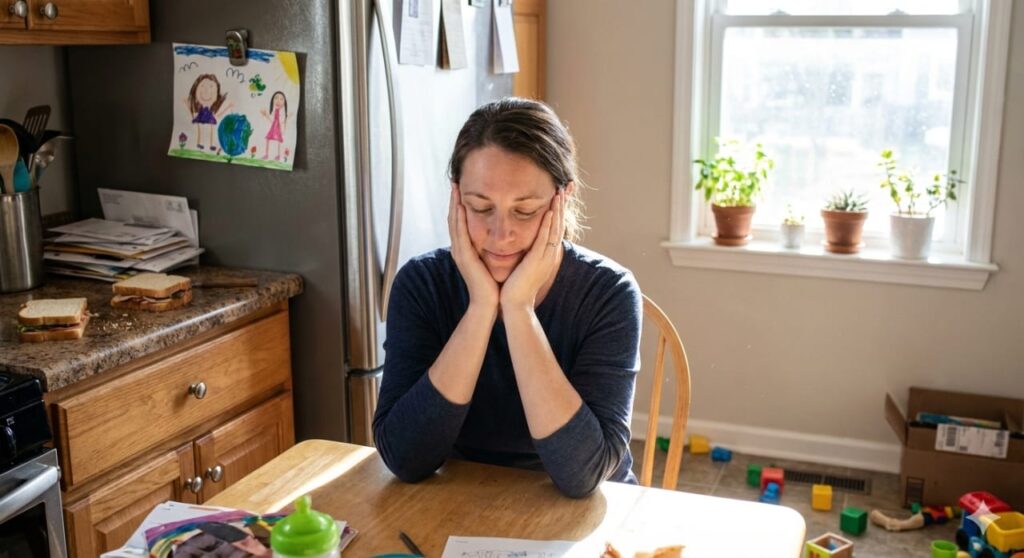
To do that, of course, I had to learn to navigate my own storms. This was the hardest, most vital work. In therapy, I unpacked my “trigger backpack.” My son’s procrastination triggered my own fear of failure.
My daughter’s loud emotions triggered my childhood need to keep the peace. I was reacting to my own old wounds, not their present-day actions. My therapist taught me to hit the pause button, the sacred space between stimulus and response.
We practiced somatic techniques: feeling my feet on the floor, taking a deep “breath of fire” out, naming the old story as it arose (“This is my anxiety, not his emergency”). Slowly, I stopped being a puppet to my triggers and started becoming the calm, grounded center my kids could orbit.
This internal work radically changed my external language. Therapy helped me swap punitive, shame-based reactions for connective, skill-building responses. Instead of “Go to your room until you can be nice!” I learned, “I see you’re really angry. It’s okay to be angry. It’s not okay to hit.
Let’s take some breaths together and then find a way to tell your brother what you need.” I was no longer a judge issuing sentences; I was a coach teaching emotional literacy. This didn’t mean permissiveness. It meant pairing clear, consistent boundaries with unwavering empathy, a combination I learned to call “kind firmness.”
Perhaps the most liberating lesson was the sanctity of the repair. I had held myself to an impossible standard of perfect parental composure. The moment I yelled, I’d spiral into guilt, which made me distant and resentful.
Therapy normalized rupture. “Every parent loses it,” my therapist said. “The magic isn’t in avoiding the rupture; it’s in mastering the repair.” She gave me a script for accountability: “I lost my temper earlier. I used a scary voice.
That was my mistake in handling my big feelings. I am working on that. I love you.” Offering these honest, humble repairs did something extraordinary: it taught my kids about grace, humility, and resilience. It showed them that love isn’t about getting it right all the time; it’s about having the courage to reconnect.
Finally, therapy gave me permission to put on my own oxygen mask first. I explored my guilt around needing time alone, my resentment from unmet needs, and the myth of the self-sacrificing parent.
By prioritizing my own well-being, not as a treat, but as a non-negotiable part of the family ecosystem, I parented from a place of abundance, not depletion. A rested, regulated me was infinitely more patient, playful, and present than a burned-out me ever could be.
I didn’t walk out of therapy with perfect kids. I walked out as a more integrated, aware, and compassionate parent. The chaos didn’t disappear, but my relationship to it did.
Our home became less a battlefield to manage and more a garden to tend, with patience, with love, and with the understanding that the most important growth often happens in the quiet, muddy work beneath the surface. Therapy didn’t just improve my parenting skills; it transformed the very heart of our family.
References
Skowron, E. A., et al. (2023). Randomized trial of parent–child interaction therapy for child welfare families: Effects on parenting, self-regulation, and child disruptive behavior. *Journal of Family Psychology, 37*(8), 1123–1135. https://doi.org/10.1037/fam0001120
National Institute for Health and Care Research (NIHR). (2024). *Psychological therapies may improve parenting skills in parents of children with chronic illnesses*. NIHR Evidence. Retrieved from https://evidence.nihr.ac.uk/alert/psychological-therapies-may-improve-parenting-skills-in-parents-of-children-with-chronic-illne
Baker Center for Children and Families. (2025). *The research behind parent‑based interventions*. Retrieved from https://www.bakercenter.org/bpt-4
Abdollahi, E., et al. (2020). The effectiveness of parenting skills training on emotional and behavioral problems of children. *Journal of Child Mental Health, 5*(1), 1–12. Retrieved from https://childmentalhealth.ir/article-1-706-en.html
Henderson, A. A. (2013). *Parenting skills as predictors of child and adolescent internalizing and externalizing behavioral problems* [Doctoral dissertation, Brigham Young University]. Retrieved from https://scholarsarchive.byu.edu/cgi/viewcontent.cgi?article=5267&context=etd