
 Posted by
 Help your child thrive by building emotional intelligence through therapy.
Learn how play therapy, CBT, and social skills training teach kids to understand, express, and manage their feelings effectively.
Imagine a child facing a towering wave of frustration because a game didn’t go their way, or a deep pit of sadness after a friend’s unkind word.
Without a map or tools to navigate these powerful inner landscapes, they can only react, they might erupt in a meltdown, retreat into sullen silence, or become physically aggressive.
This is where emotional intelligence, the learned ability to identify, understand, express, and regulate emotions, becomes the cornerstone of resilience. For children who struggle with these skills, whether due to developmental differences, trauma, anxiety, or simply a lack of modeling, therapy is not about “fixing” them.
It’s a dedicated, playful, and safe workshop where they can build the essential “Feelings Toolkit” they need to thrive socially, academically, and personally.
Therapy provides the foundational building block of emotional literacy. Many children live in a world of vague bodily sensations, a tight chest, a hot face, a knotted stomach without the words to name the underlying feeling.
A child therapist acts as an emotion translator. Through age-appropriate methods like play therapy, art, or specially designed games, they help children connect physical sensations to emotional vocabulary.
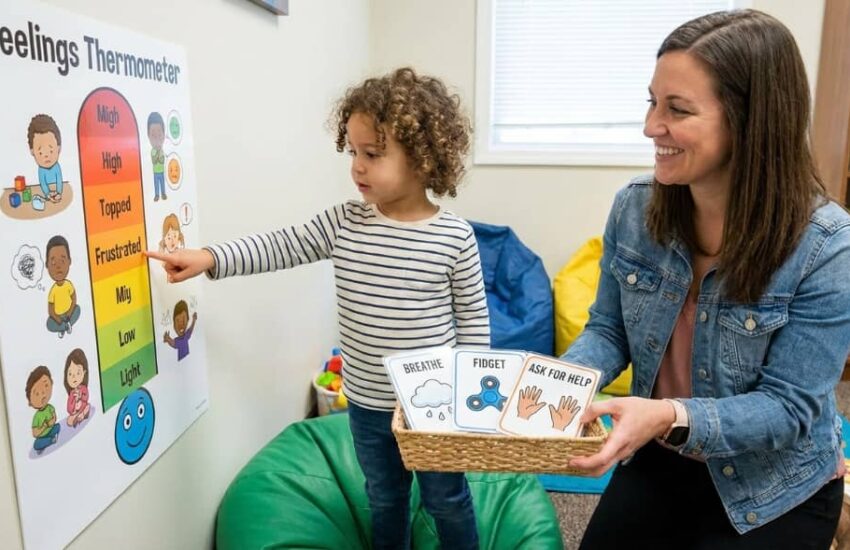
They might use feeling charts with expressive faces, read stories that label characters’ emotions, or role-play with puppets. “It looks like your body is feeling really wiggly and loud right now.
Does that feel like excitement or anger?” This simple act of naming is powerfully disarming; it gives the child a sense of mastery over a previously overwhelming internal experience and is the first step toward managing it.
With a growing vocabulary, therapy shifts to understanding the causes and connections of emotions.
Using cognitive-behavioral techniques adapted for children, therapists help them see the links between thoughts, feelings, and actions in a concrete way (often called the “thought-feeling-behavior chain”). They might draw a picture: “Your thought was ‘They took my toy on purpose!’ That made you feel angry. What did your angry body want to do?”
This helps children see that feelings don’t just happen magically; they are reactions to perceptions. It also introduces the revolutionary idea that by changing their thoughts (e.g., “Maybe they didn’t see I was using it”), they can influence their feelings.
This insight is the bedrock of self-regulation, moving them from being passive victims of emotion to active participants in their emotional life.
The core of emotional intelligence is self-regulation, and therapy is a gym for building these muscles. A therapist provides a co-regulating presence, calmly modeling how to sit with big feelings without being swept away.
They teach concrete, child-friendly coping strategies: deep “dragon breathing,” using a fidget tool, retreating to a designated calm-down corner, or pressing hands together for proprioceptive input. Crucially, they practice these skills before a crisis, during play, so they become accessible in moments of high stress.
Therapy also provides a safe space to practice and repair social interactions, a key component of emotional intelligence known as social awareness and relationship skills.
Through guided play, therapists help children learn to read social cues, take turns, express needs respectfully (“Can I have a turn next?”), and practice empathy by wondering how a playmate might feel.
Ultimately, therapy empowers children to become the authors of their own emotional narratives. It moves them from dysregulation to competence, teaching them that all emotions are acceptable, but not all behaviors are.
A child learns that it’s okay to feel furious at their sibling, but hitting isn’t okay; instead, they can use their words or ask for help. This work reduces anxiety, minimizes behavioral outbursts, and builds self-esteem.
By investing in a child’s emotional intelligence through therapy, we give them more than coping skills for childhood. We give them a lifelong internal compass, the ability to navigate complex feelings, build healthy relationships, and face life’s inevitable challenges with resilience, empathy, and grace.
References
Kids First Services First Insights. (2025, March 10). *The impact of psychotherapy on emotional intelligence in children*. Retrieved from https://www.kidsfirstservices.com/first-insights/the-impact-of-psychotherapy-on-emotional-intelligence-in-children
Fernández-Berrocal, P., et al. (2024). Exploring emotional intelligence in children using the trait emotional intelligence questionnaire: A systematic review. *Frontiers in Psychology*. https://pmc.ncbi.nlm.nih.gov/articles/PMC11523793/
Peña-Sarrionandia, A., et al. (2025). Non-therapeutic play to overcome negative emotional symptoms in children: A systematic review. *Frontiers in Psychology, 16*, Article 1475387. https://doi.org/10.3389/fpsyg.2025.1475387
Birch Therapy PLLC. (2025, March 1). *The power of emotional intelligence in kids*. Retrieved from https://www.birchtherapypllc.com/blog/emotional-intelligence-therapy-children-nc