
 Posted by
My nephew stopped speaking at school. He spoke at home. He spoke in the car. He spoke to his stuffed animals. But in the classroom, he was silent. The school suggested a behavioral plan. Stickers for participation. Consequences for refusal. Nothing worked. His silence was not defiance. It was a wall. His parents found a therapist who practiced psychodynamic play therapy, and something shifted. Not overnight. Not dramatically. But slowly, the wall began to come down.
Psychodynamic play therapy is an approach rooted in the belief that children’s play is their language. Where adults talk through their problems, children play through theirs. The therapy is based on the idea that unconscious feelings, conflicts, and anxieties drive behavior. A child who cannot articulate why they are angry, scared, or sad will often act it out with toys. The therapist’s role is not to direct the play, but to observe, reflect, and interpret what emerges.
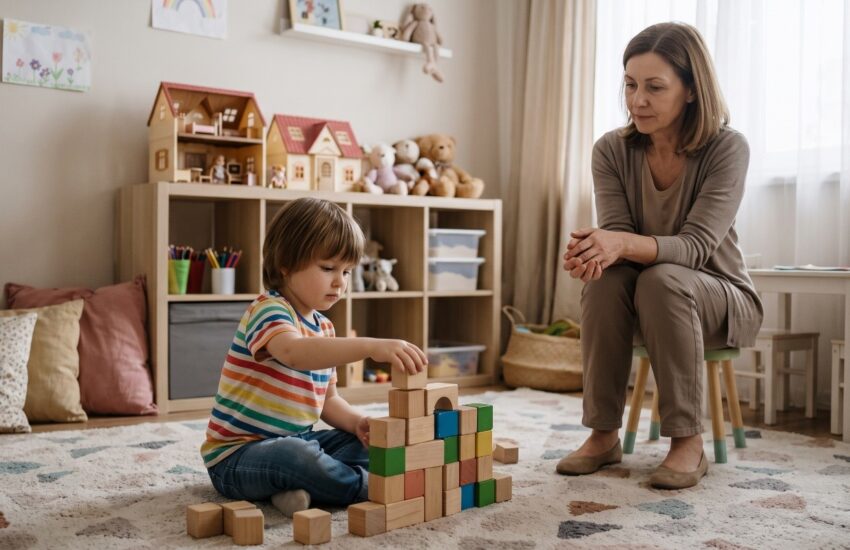
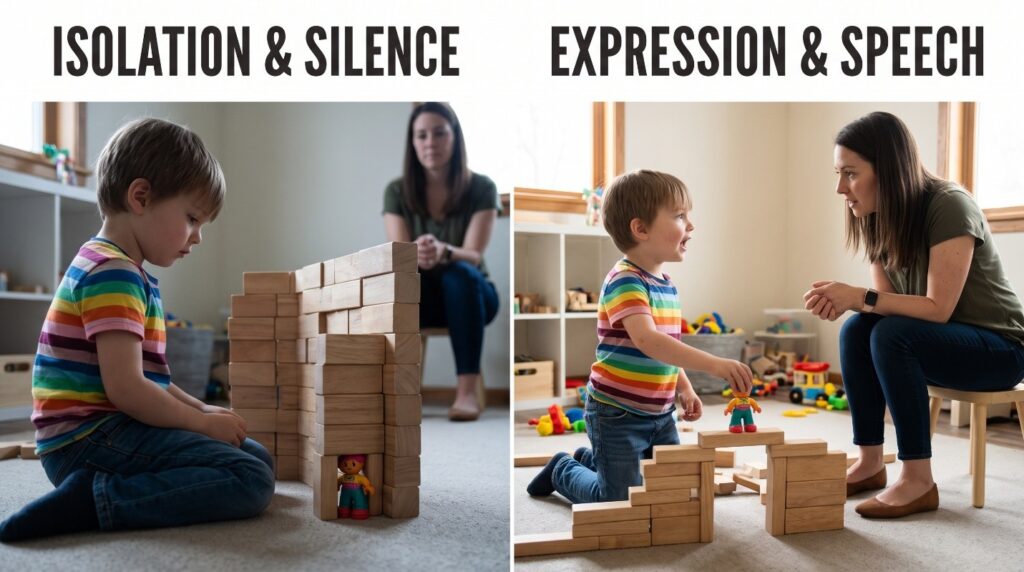
The first thing I learned is that psychodynamic play therapy is not structured. There is no agenda. The child chooses what to play with and how. The therapist follows their lead. My nephew spent his first three sessions building walls out of blocks. He did not speak. He did not invite the therapist to join. She sat nearby, watching, occasionally reflecting what she saw. “You are building a very strong wall.” He ignored her. He kept building. The fourth session, he knocked the wall down. Then he built it again. That pattern continued for weeks. The wall was not random. It was his silence made visible.
The second thing I learned is that interpretation is tentative, not authoritative. The therapist does not say, “You are building a wall because you feel unsafe.” She says, “I wonder if this wall is protecting something.” She invites. She does not impose. That distinction matters. A child who feels interpreted without consent will shut down. A child who feels invited to explore will open up. My nephew eventually responded to her wondering. “It protects the baby,” he said. The baby was a small figure he had buried under a pile of blocks. The baby was him. The baby was the part of him that felt vulnerable at school.
The third thing I learned is that play therapy works on displacement. The child projects their feelings onto toys, characters, and scenarios. That distance makes the feelings bearable. My nephew could not say “I am scared of the other kids.” But he could make a dinosaur say it. He could make the dinosaur run away from a group of smaller dinosaurs. He could make the dinosaur find a cave and hide. The therapist reflected what she saw. “The dinosaur is scared of the other dinosaurs.” He nodded. They talked about the dinosaur for weeks. Eventually, they talked about my nephew.
The fourth thing I learned is that the therapeutic relationship is the agent of change. The toys are just tools. What heals is the consistent, safe presence of an adult who is curious without being intrusive, who reflects without judging, who holds space for whatever emerges. My nephew tested that relationship. He ignored the therapist. He tried to shock her. He made a mess. She stayed. She remained calm. She continued to reflect. He learned that his feelings, no matter how messy, were acceptable. That acceptance was the beginning of his healing.
The fifth thing I learned is that progress is slow. Psychodynamic play therapy is not a quick fix. It is not behavioral therapy. It does not teach skills. It does not target symptoms. It targets the underlying conflicts that drive the symptoms. That work takes time. My nephew did not speak at school for a full year. But he started speaking to the therapist. Then he started speaking to one friend. Then he started speaking in small groups. The change was gradual, but it was lasting. The wall came down brick by brick.
The sixth thing I learned is that parents are part of the process. The therapist met with my sister and brother-in-law regularly. She did not share every detail of the sessions. That would have broken my nephew’s trust. But she shared themes. She helped them understand what he was working through. She coached them on how to respond when he acted out at home. The therapy was not just for him. It was for the whole family system.
Psychodynamic play therapy is not for every child. Some children need more structured approaches. Some need behavioral interventions. Some need medication. But for children who cannot access their feelings through words, play therapy offers a path. It offers a way to say the unsayable. It offers a way to be understood without being interrogated. It offers a way to heal.
My nephew is eleven now. He speaks at school. He has friends. He still builds walls sometimes. But he knocks them down faster. And he knows that there is always someone there, watching, wondering, waiting for him to tell his story. That is what play therapy gave him. That is what it gave all of us.
References
1. Mordock, J. B., & Faletto, R. (2014). Psychodynamic play therapy. In D. A. Crenshaw & A. L. Stewart (Eds.), *Play therapy: A comprehensive guide to theory and practice*. Routledge.
2. Fernandez, K. T. G., & Sugay, C. O. (2016). Psychodynamic play therapy: A case of selective mutism. *International Journal of Play Therapy, 25*(4), 203–209. [https://doi.org/10.1037/pla0000034](https://doi.org/10.1037/pla0000034)
3. Gil, E. (Ed.). (2015). *The healing power of play: Working with abused children*. Guilford Press.
4. Klein, M. (1975). *The psycho-analysis of children*. Delacorte Press. (Original work published 1932.)
5. Winnicott, D. W. (1971). *Playing and reality*. Routledge.
6. Russ, S. W. (2003). *Play in child development and psychotherapy: Toward empirically supported practice*. Routledge.