
 Posted by
 I had tried everything for my anxiety. Deep breathing. Meditation apps. Journaling. Therapy. They all helped, but none of them reached the tightness in my chest that showed up every morning before work. Then a friend suggested music therapy. I rolled my eyes. I already listened to music. How was this different? I was not prepared for the answer.
Music therapy is not the same as listening to music you enjoy. It is a clinical, evidence-based practice delivered by a trained music therapist who uses rhythm, melody, harmony, and silence to address specific therapeutic goals. When the goal is anxiety reduction, the therapist does not just hand you a relaxing playlist. They assess your anxiety, understand your triggers, and design musical experiences that interact with your nervous system in targeted ways.
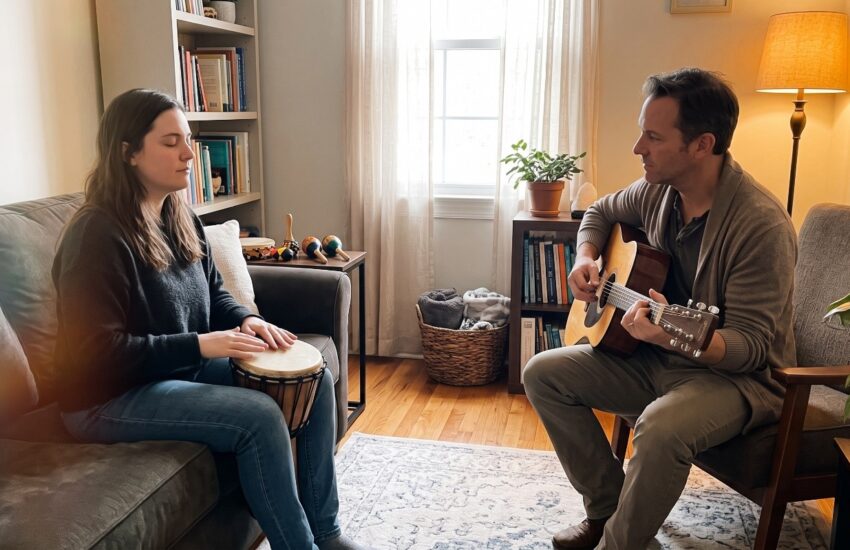
My first session was strange. I expected to sit and listen. Instead, my therapist handed me a drum. She asked me to tap out what my anxiety felt like. I felt ridiculous. But I started tapping. Fast, erratic, uneven. The rhythm was chaotic. She listened without judgment and then began to play a steady, slow beat underneath my chaos. At first, my tapping fought against hers. Then, slowly, without my conscious effort, my rhythm began to align with hers. My breathing changed. My shoulders dropped. My tapping slowed. The chaos became a pattern. I did not understand what had happened, but I felt different.
That is the essence of music therapy for anxiety. It does not ask you to think your way out of anxiety. It uses sound to regulate the nervous system directly. Rhythm entrains the body. Melody engages the emotional brain. Silence creates space for rest. A trained therapist knows when to match your energy and when to gently lead you toward calm.
The science supports what I experienced. Music activates the parasympathetic nervous system, the branch responsible for rest and recovery. It lowers cortisol, the stress hormone. It slows heart rate and breathing. It releases dopamine, which improves mood. It also engages the prefrontal cortex, the part of the brain responsible for emotional regulation. In other words, music therapy does not just distract you from anxiety. It changes the physiological state that anxiety lives in.
What surprised me most was how active the process was. I was not a passive recipient. I was a participant. Some sessions involved playing instruments. Others involved humming, toning, or chanting. My therapist taught me to use my own voice as a tool for regulation. She explained that humming stimulates the vagus nerve, which is directly connected to the parasympathetic nervous system. A few minutes of humming could do what twenty minutes of meditation could not.
I also learned that music therapy is deeply personal. My therapist asked about the music I loved, the songs that reminded me of safety, and the sounds that triggered discomfort. She built a repertoire that was uniquely mine. Some sessions used recordings. Others used live music. Sometimes she played guitar. Sometimes she sang. Sometimes we sat in silence together, letting the last note fade before we spoke.
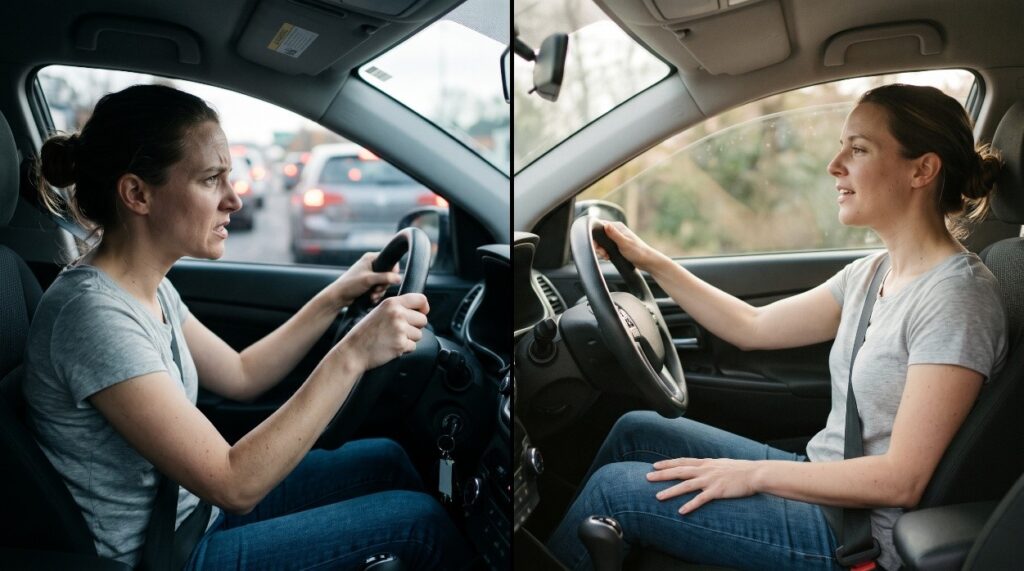
The progress was gradual. I did not leave the first session cured. But I left with a tool I could use outside the therapy room. I started humming in the car when traffic made me tense. I started using a slow rhythmic tapping on my legs when anxiety spiked. I created a playlist of songs that my therapist and I had identified as regulating, not just distracting. I used them intentionally, not just as background noise.
Music therapy is used for many conditions, but its effect on anxiety is particularly well documented. It is effective for generalized anxiety, panic disorder, social anxiety, and anxiety related to medical procedures. It works for children and adults. It works for people who have no musical training and for those who have spent their lives playing. The only requirement is a willingness to engage.
If you are struggling with anxiety and traditional approaches have not fully reached it, consider music therapy. It is not a replacement for therapy or medication. It is a complement. It reaches parts of the nervous system that words cannot. It uses something you already love and turns it into medicine.
My anxiety has not disappeared. But I have a new way of meeting it. When the tightness in my chest arrives, I do not just breathe. I hum. I tap. I listen. I let the rhythm hold me until the storm passes. That is what music therapy gave me.
References
de Witte, M., Pinho, A. da S., Stams, G.-J., Moonen, X., Bos, A. E. R., & van Hooren, S. (2025). Music therapy for the treatment of anxiety: A systematic review with multilevel meta-analyses. *eClinicalMedicine, 84*, 102764. [https://doi.org/10.1016/j.eclinm.2025.102764](https://doi.org/10.1016/j.eclinm.2025.102764)
Deng, J., Lei, Y., Teng, Y., & others. (2021). Effects of music therapy on anxiety: A meta-analysis of randomized controlled trials. *General Hospital Psychiatry, 70*, 22–31. [https://doi.org/10.1016/j.genhosppsych.2021.07.006](https://doi.org/10.1016/j.genhosppsych.2021.07.006)
Bradt, J., Dileo, C., & Shim, M. (2013). Music interventions for preoperative anxiety. *Cochrane Database of Systematic Reviews, 2013*(6), CD006908. [https://doi.org/10.1002/14651858.CD006908.pub2](https://doi.org/10.1002/14651858.CD006908.pub2)
Gold, C., Mössler, K., Grocke, D., et al. (2013). Individual music therapy for mental health care clients with depression: A meta-analysis. *British Journal of Music Therapy, 27*(1), 3–12.
Lun, T., Chen, Y., Liu, J., Li, L., Yu, J., & Xiang, M. (2024). Music therapy and anxiety: A bibliometric review from 1993 to 2023. *Medicine, 103*(9), e37447. [https://doi.org/10.1097/MD.0000000000037447](https://doi.org/10.1097/MD.0000000000037447)
Li, Y., et al. (2026). The efficacy of music therapy in alleviating anxiety among college students: A systematic review and meta-analysis. *Frontiers in Psychology*.
American Music Therapy Association. (n.d.). *What is music therapy?* [https://www.musictherapy.org/about/musictherapy/](https://www.musictherapy.org/about/musictherapy