
 Posted by
 My partner and I were stuck. We had the same arguments over and over. I would bring up a concern, they would get defensive, I would feel unheard, and we would both withdraw. We loved each other, but we were exhausted. We had tried to fix things on our own, but nothing worked. A friend suggested the Gottman Method, and I was skeptical. I thought therapy was just talking about feelings. I did not understand that it was a structured, research-based approach to building a healthier relationship.
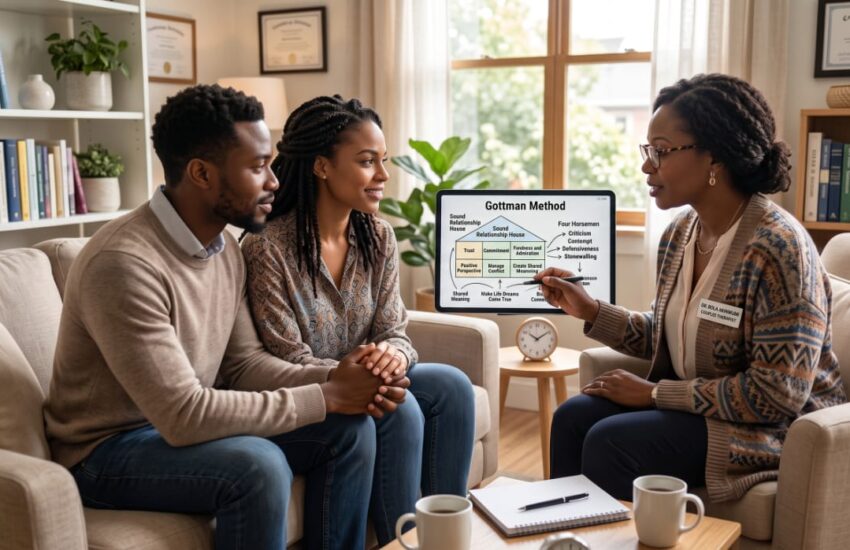
The Gottman Method was developed by Dr. John Gottman and Dr. Julie Schwartz Gottman after decades of research on thousands of couples. They studied what made relationships succeed and what made them fail. They identified specific behaviors that predict divorce with over 90 percent accuracy. Those behaviors are criticism, contempt, defensiveness, and stonewalling. They called them the Four Horsemen because they are so destructive.
The first thing I learned was how to identify these behaviors in my own relationship. I criticized my partner’s character instead of addressing a specific behavior. I used contempt, rolling my eyes and speaking with sarcasm. I became defensive when my partner raised concerns, deflecting blame instead of listening. And I stonewalled, shutting down and withdrawing when I felt overwhelmed. I was not just a victim of our conflicts. I was a participant.
The second thing I learned was how to replace these destructive behaviors with healthier alternatives. Instead of criticism, I learned to use gentle start-ups. Instead of saying, “You never listen to me,” I learned to say, “I feel unheard when I am talking and you look at your phone. Can we work on that?” Instead of contempt, I practiced expressing appreciation and respect. Instead of defensiveness, I learned to take responsibility for my part. Instead of stonewalling, I learned to self-soothe and return to the conversation when I was calmer.

The third thing I learned was the importance of turning toward my partner. Gottman found that happy couples consistently respond to each other’s bids for connection. A bid is a small gesture, a question, a comment, a look. Turning toward it means acknowledging it and engaging. Turning away means ignoring it. Turning against it means responding with hostility. I started paying attention to my partner’s bids. When they sighed, I asked what was wrong. When they shared a story, I listened instead of interrupting. Those small moments of connection built a foundation of trust.
The fourth thing I learned was how to manage conflict. Gottman teaches that all couples have unsolvable problems. The goal is not to solve them but to dialogue about them without damaging the relationship. We learned to soften our startup, to accept influence, to make repairs when we hurt each other, and to take breaks when emotions escalated. We also learned to build a shared meaning system, creating rituals and goals that connected us to something larger than our day-to-day conflicts.
The fifth thing I learned was the importance of creating a culture of appreciation. Gottman found that happy couples express fondness and admiration regularly. They focus on what is going right, not just what is going wrong. We started sharing three things we appreciated about each other each day. It felt awkward at first, but it shifted the emotional climate of our relationship. We stopped keeping score of each other’s failures and started noticing each other’s strengths.
The Gottman Method did not fix our relationship overnight. It required practice, patience, and commitment. But it gave us a shared language for our struggles. It helped us understand that we were not broken. We were human. And we were capable of change.
There is so much more to learn about building healthy relationships. Our website is filled with articles on communication, conflict resolution, and therapeutic approaches. Head over and explore, because a strong relationship is not a destination. It is a practice.
References
Gottman, J. M., & Gottman, J. S. (2015). *10 principles for doing effective couples therapy*. W. W. Norton.
Gottman, J. M., & Gottman, J. S. (2017). *The seven principles for making marriage work: A practical guide from the country’s foremost relationship expert* (Rev. ed.). Harmony Books.
Babcock, J. C., Gottman, J. M., Ryan, K. D., & Gottman, J. S. (2013). A component analysis of a brief psychoeducational couples’ workshop: One-year follow-up results. *Journal of Family Therapy, 35*(3), 252–280.
Irvine, T. J., Peluso, P. R., Benson, K., Cole, C., Cole, D., Gottman, J. M., & Schwartz Gottman, J. (2024). A pilot study examining the effectiveness of Gottman Method Couples Therapy over treatment-as-usual approaches for treating couples dealing with infidelity. *The Family Journal, 32*(1), 81–94. [https://doi.org/10.1177/10664807231210123](https://doi.org/10.1177/10664807231210123)
Rajaei, A., Daneshpour, M., & Robertson, J. (2019). The effectiveness of couples therapy based on the Gottman method among Iranian couples with conflicts. *Journal of Counseling and Psychotherapy*.
Garanzini, S., Yee, A., Gottman, J. M., Gottman, J. S., Cole, C., Preciado, M., & Jasculca, C. (2017). Results of Gottman-Method therapy with gay and lesbian couples. *Journal of Marital and Family Therapy, 43*(4), 674–684.
Zahl-Olsen, R., Thuen, F., & Bertelsen, T. B. (2024). The effectiveness of the in-person and online Gottman Seven Principles Couple Enhancement Program: A propensity-score matching design. *Journal of Marital and Family Therapy*.